
Showcase | 案例成果
Communicable Design Collaboration | 可沟通设计协作 | 2025
DigitalFUTURES 2025 Workshop | DigitalFUTURES 2025 工作营
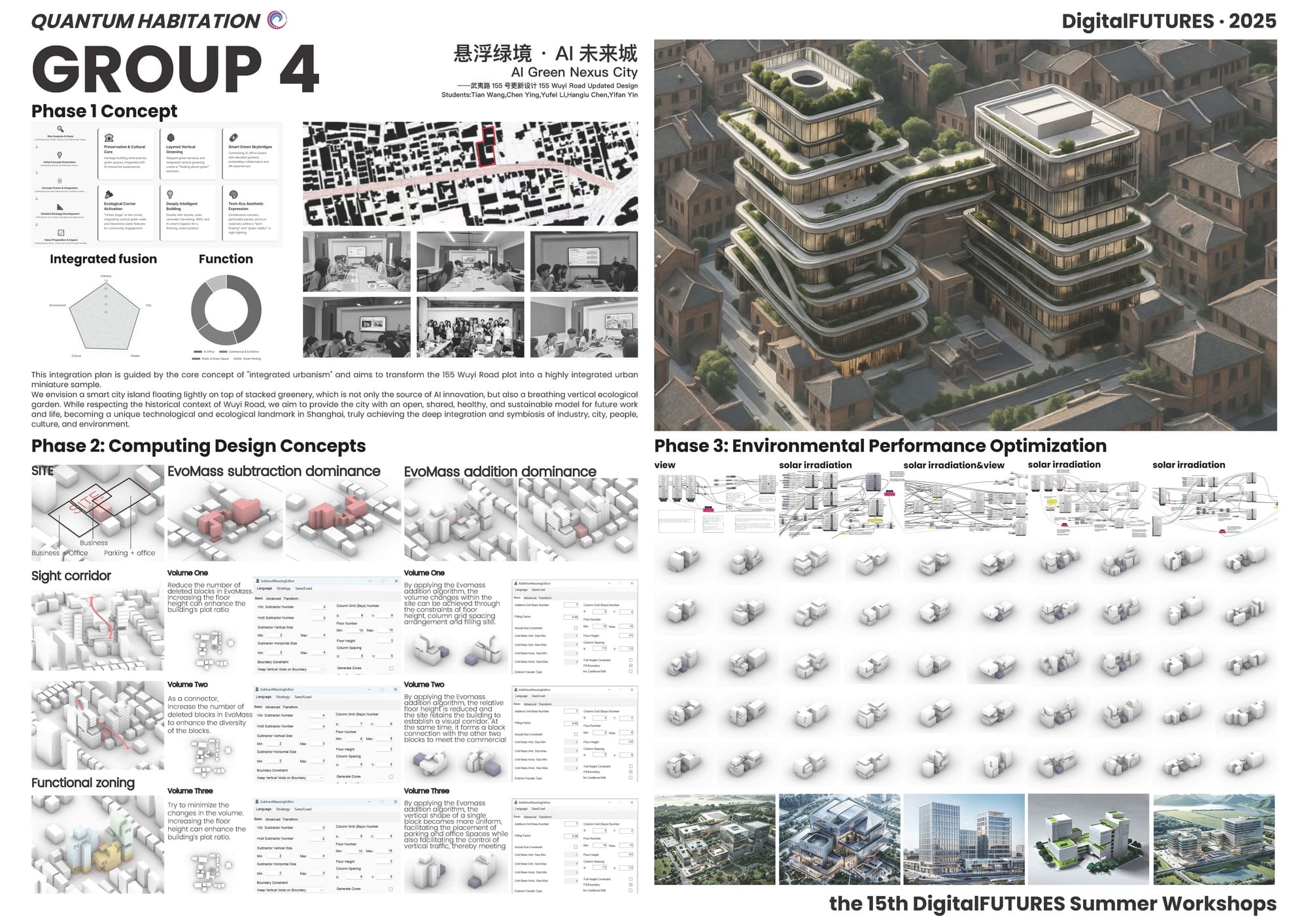

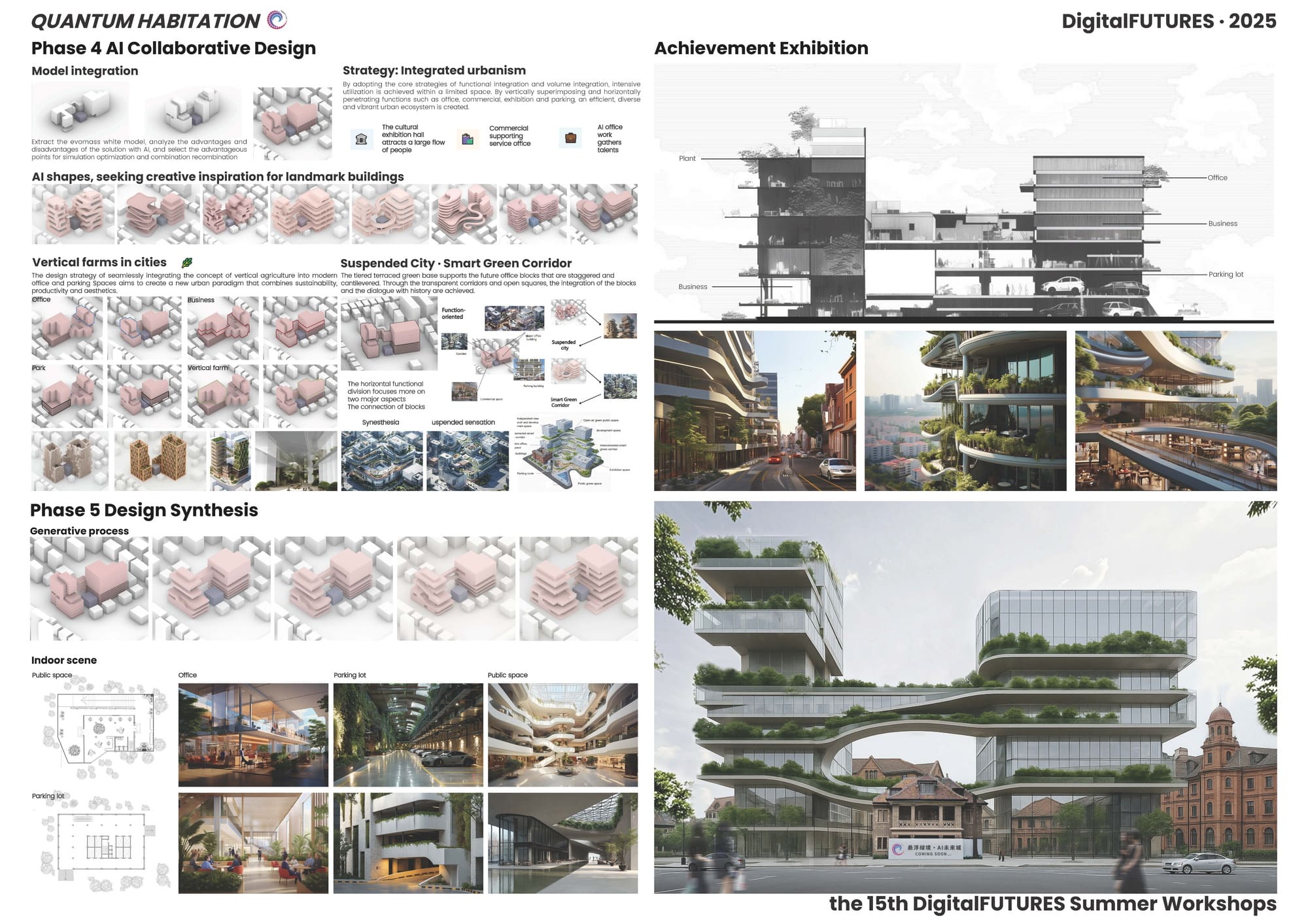
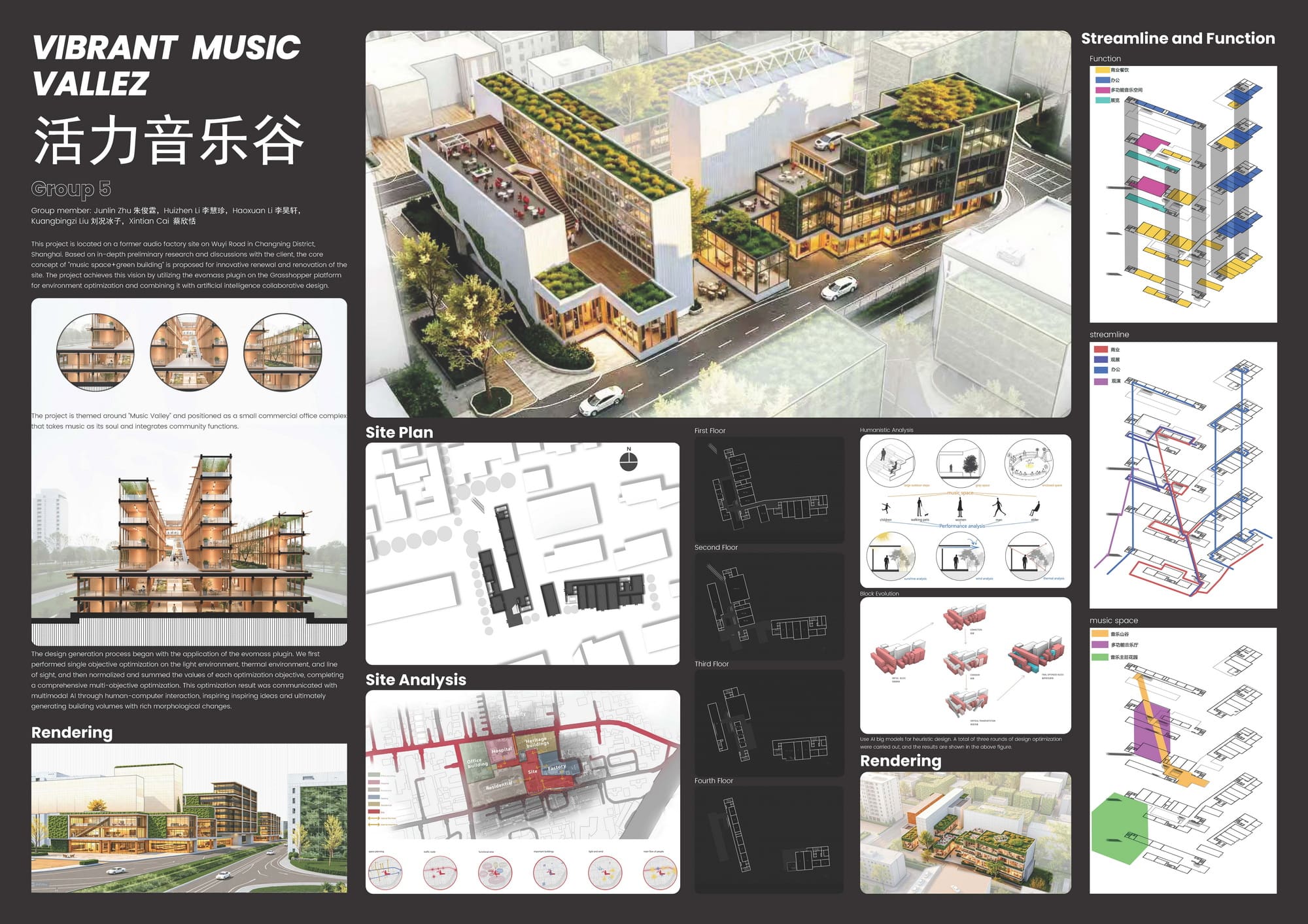
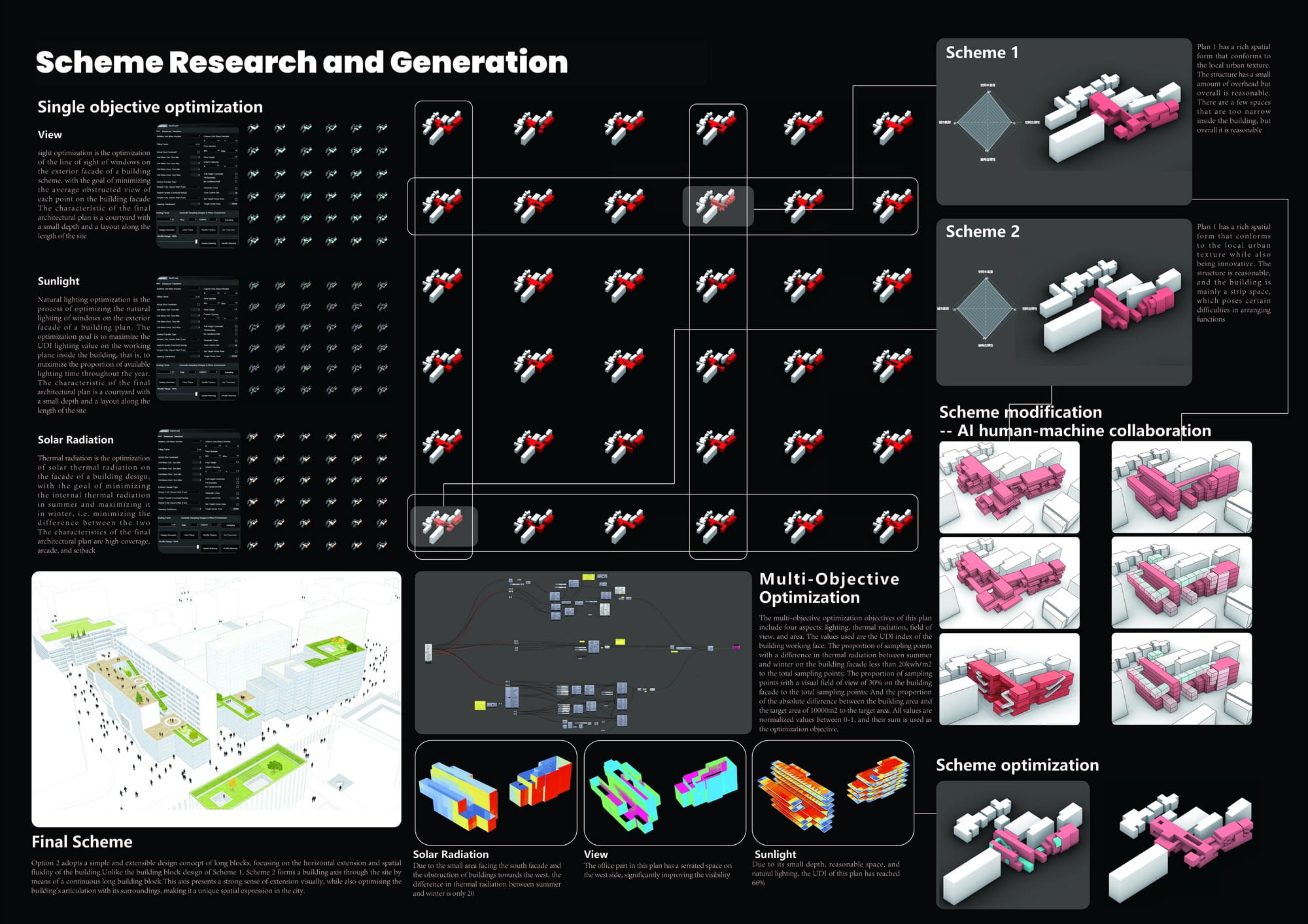
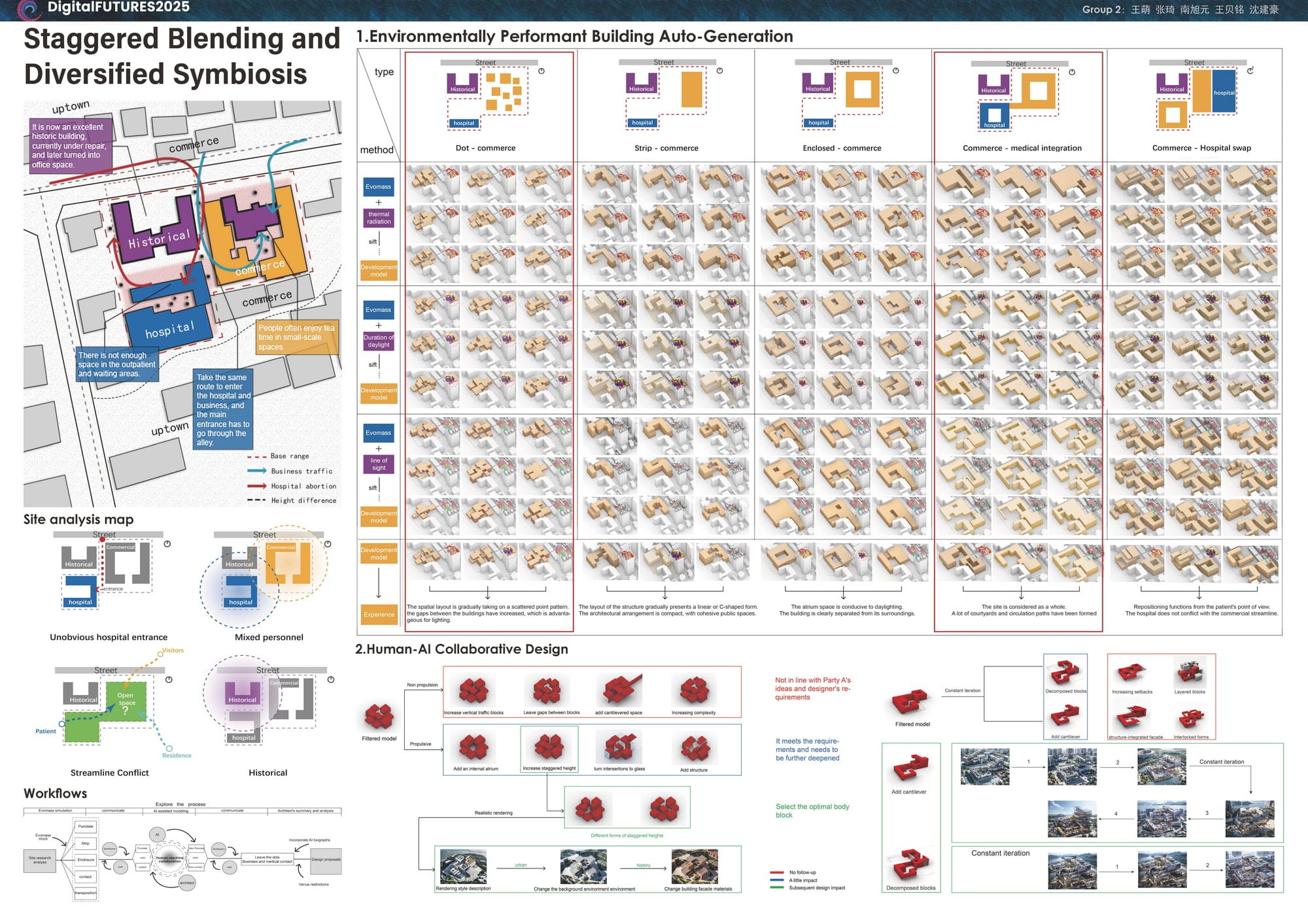
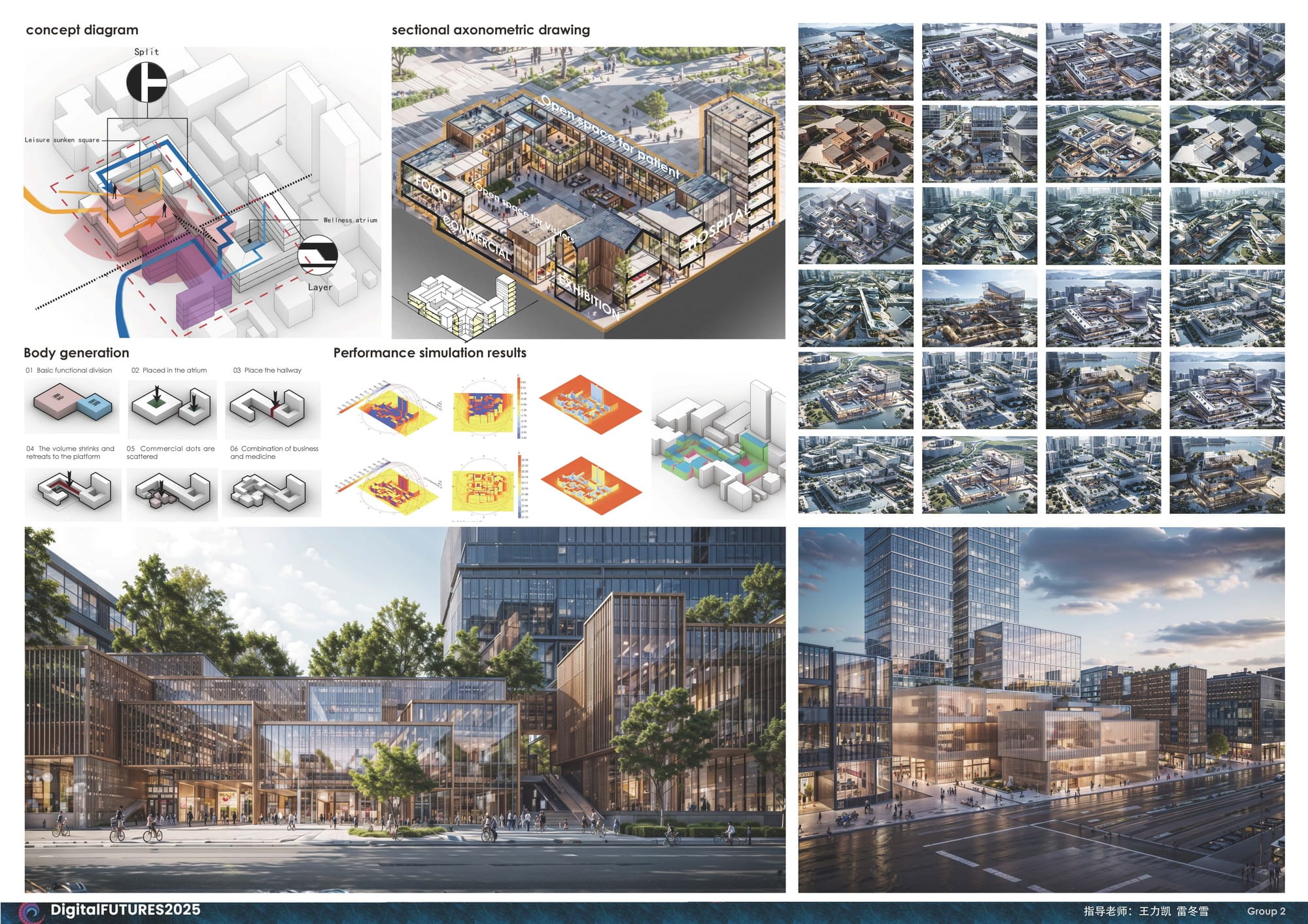
Using Mediator AI and EvoMass to Achieve Consensus in Architectural Design | 使用 Mediator AI 与 EvoMass 在建筑设计中达成共识
In this workshop, we integrate two computational tools—EvoMass for design optimization and Mediator AI, an agentic AI system. Mediator AI serves as an intermediary among designers, users, and developers, helping stakeholders better understand each other's needs throughout the design process. Meanwhile, EvoMass supports rapid architectural design exploration and prototyping by embedding environmental considerations directly into design generation. Together, EvoMass and generative AI enable designers to quickly iterate on design alternatives and visualize concepts effectively. | 在本工作坊中,我们整合了两种计算工具——用于设计优化的 EvoMass 以及作为智能体 AI 系统的 Mediator AI。Mediator AI 充当设计师、用户与开发者之间的中介,帮助各利益相关方在整个设计过程中更好地理解彼此的需求。同时,EvoMass 通过将 环境因素直接融入设计生成过程,支持快速的建筑方案探索与原型制作。EvoMass 与生成式 AI 共同帮助设计师高效地迭代设计方案并进行概念可视化。
Massing-PV Integrated Design Optimization | 建筑体量-光伏协同设计优化 | 2024-2025
XJTLU SURF (Summer Undergraduate Research Fellowship) Project | 西交利物浦本科暑期研究项目
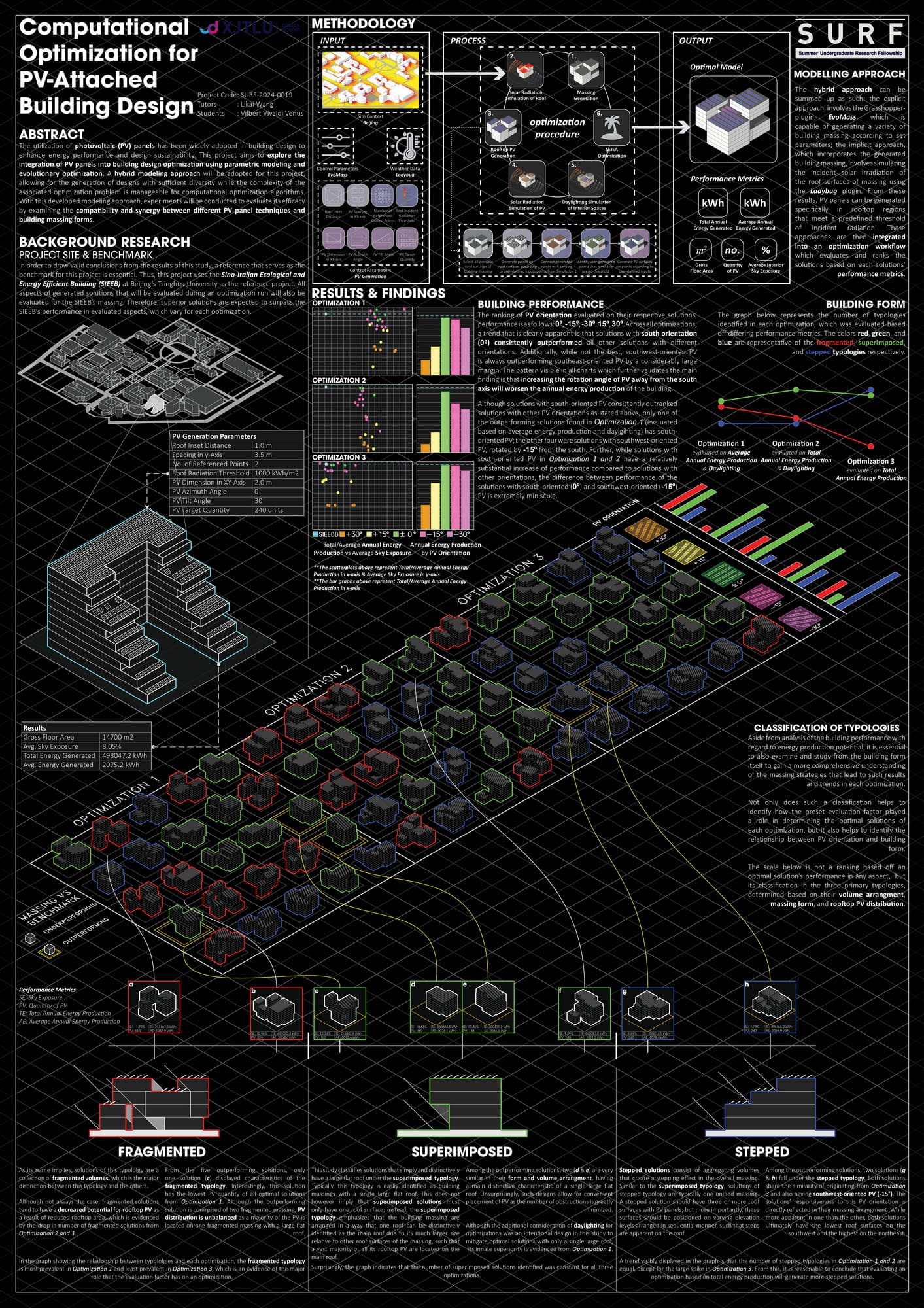
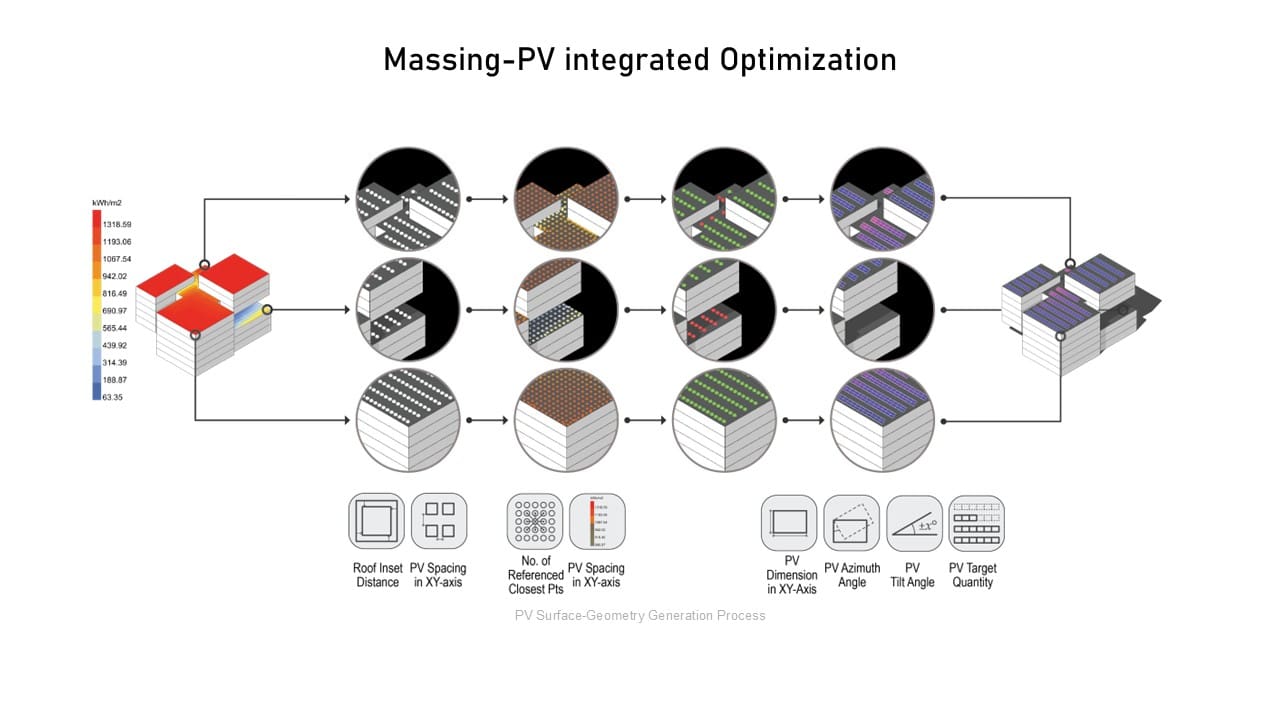
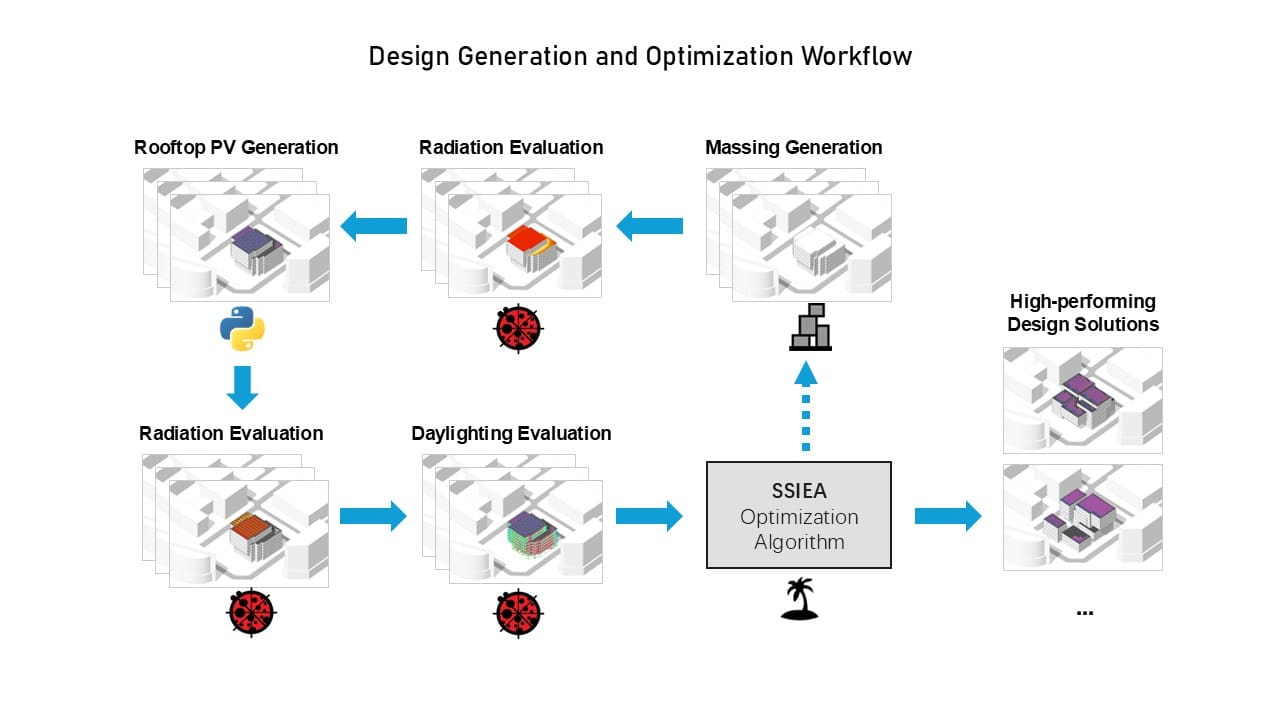
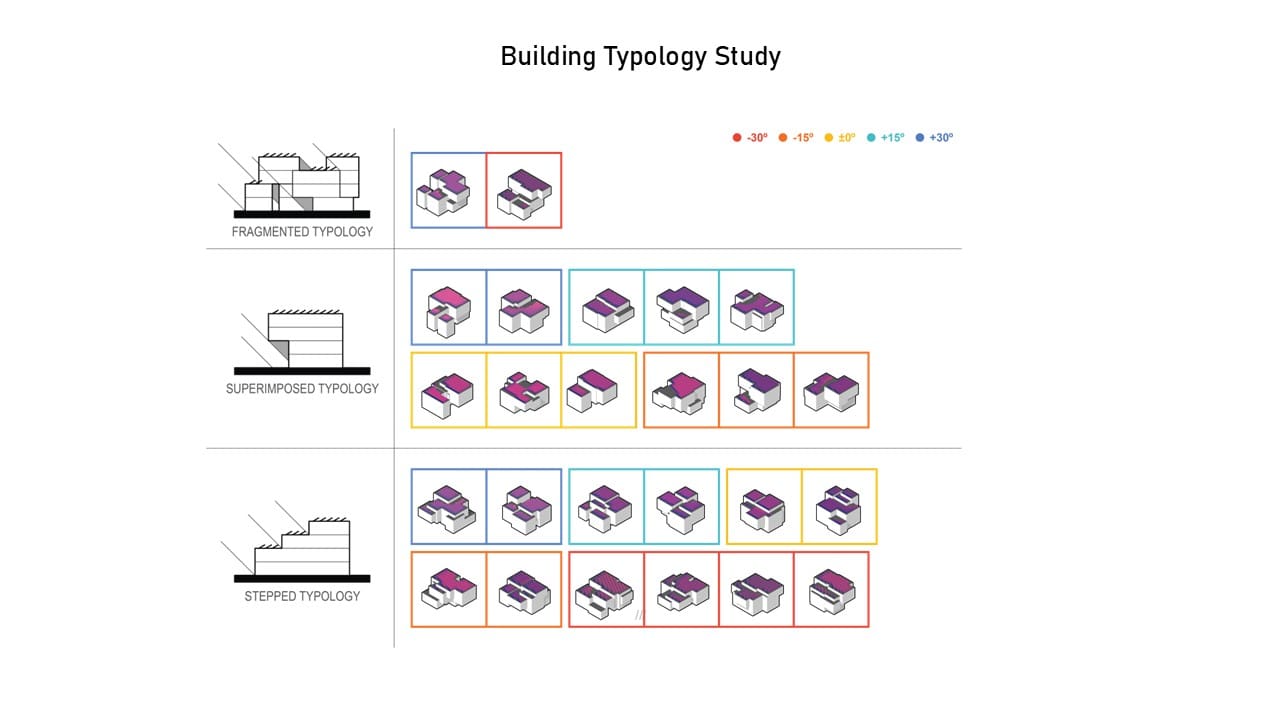
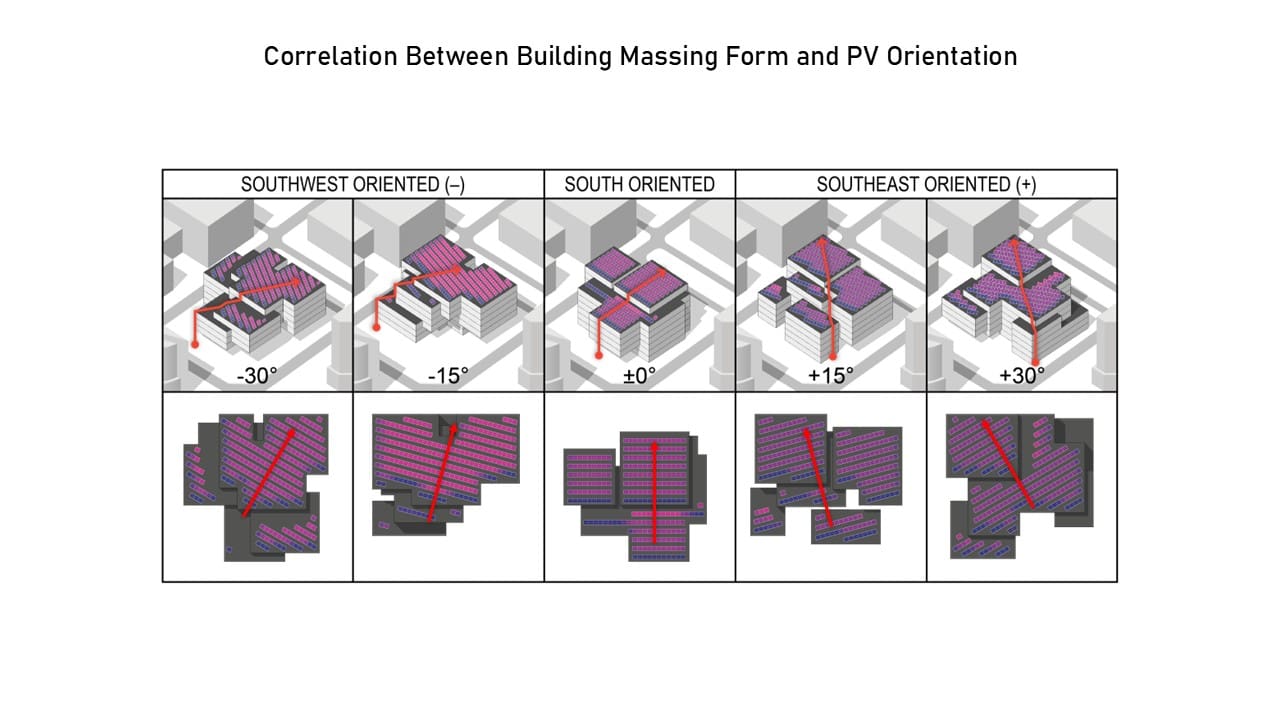
Rooftop PV in Massing Optimization: Synergy of Daylighting and Solar Generation | 将屋顶光伏融入体量优化,兼顾采光与发电协同
This project explores how rooftop PV panels can be integrated into the building massing optimization process. By doing so, we can identify synergistic solutions that accommodate both the requirements of building lighting performance and solar energy production. | 本项目探索如何将屋顶光伏板融入建筑体量优化的过程中。通过这种方式,我们可以找到兼顾建筑采光性能与太阳能发电需求的协同解决方案。
AI-Enhanced Design Optimization and Exploration | AI增强的设计优化与探索 | 2023-2024
XJTLU SURF (Summer Undergraduate Research Fellowship) Project | 西交利物浦本科暑期研究项目
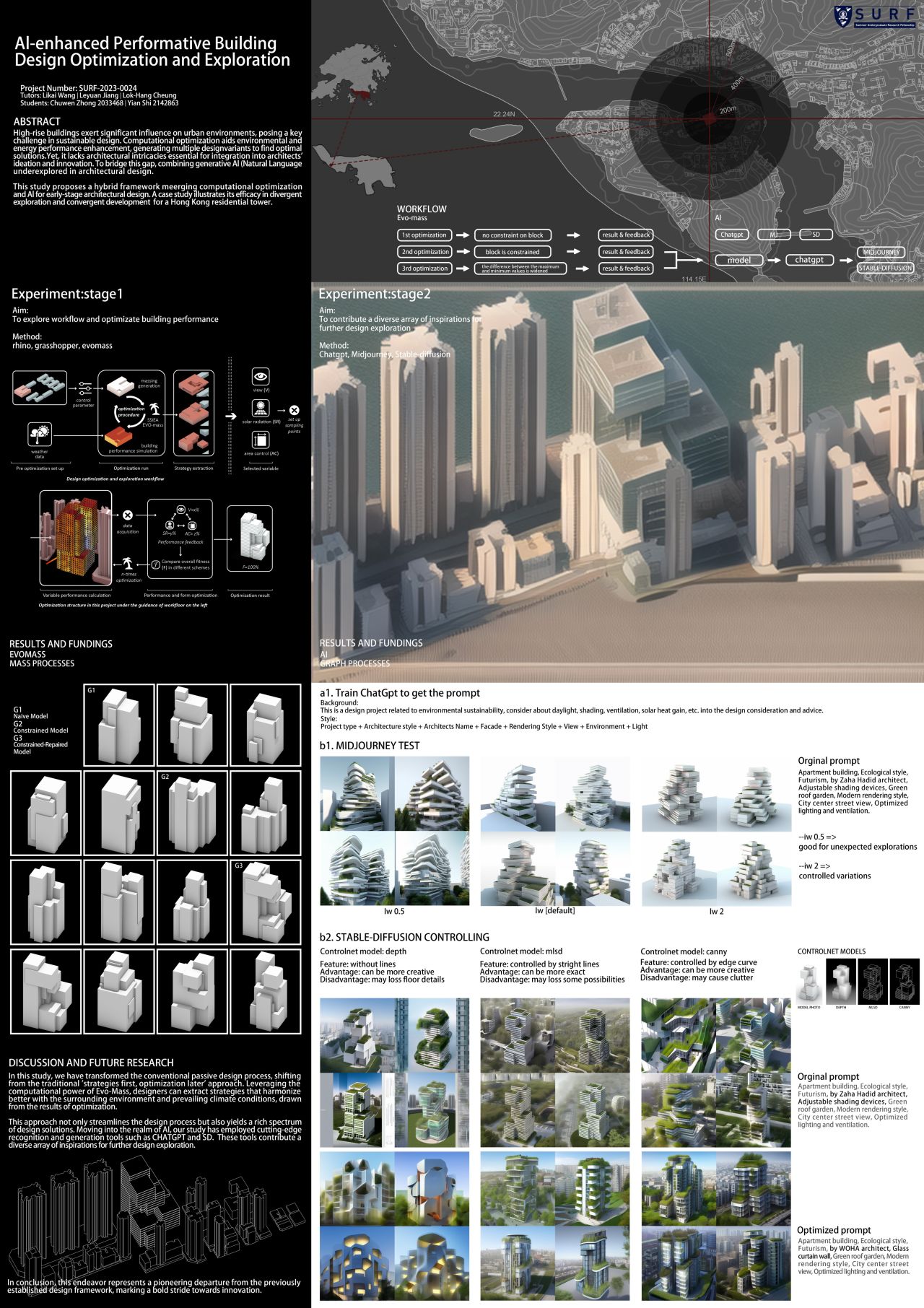
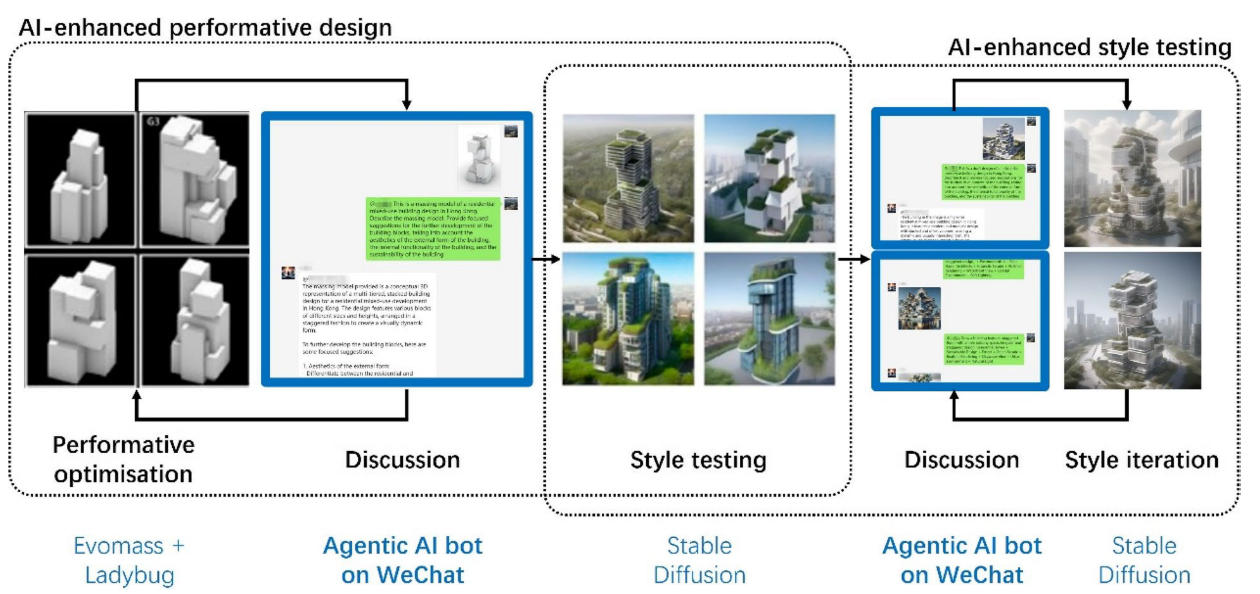
Using AI for Enhanced Architectural Exploration | 使用AI增强建筑探索
This project explores how computer vision and AI chatbot techniques can support early-stage architectural design through performance-based building optimization. Performance-based optimization first generates site-specific building massings, which then serve as the foundation for design exploration using computer vision to identify and analyze different architectural languages. Meanwhile, AI chatbots assist designers in crafting prompts to generate more effective outputs from computer vision. | 本项目探索如何利用计算机视觉与AI聊天机器人技术,通过基于性能的建筑优化来支持建筑设计的早期阶段。基于性能的优化首先生成针对特定场地的建筑体量,随后借助计算机视觉识别与分析不同建筑语言,以此作为设计探索的基础。同时,AI聊天机器人帮助设计师撰写提示词,以从计算机视觉中获得更有效的输出。
Optimization-Assisted Architectural Design Explore | 优化辅助的建筑设计探索 | 2023
NUS (National University of Singapore) AI for Design Course | 新加坡国立大学AI for Design课程
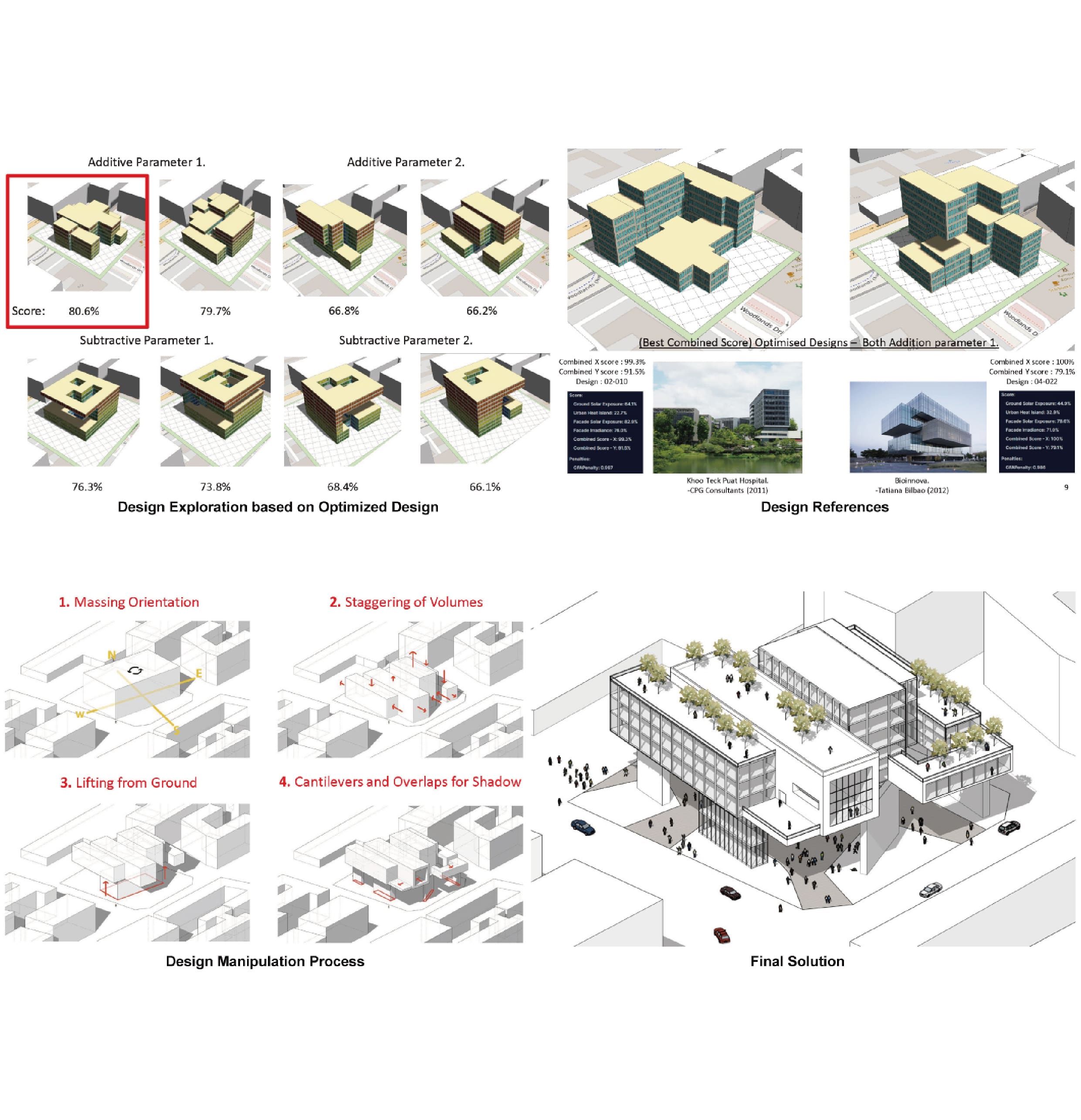
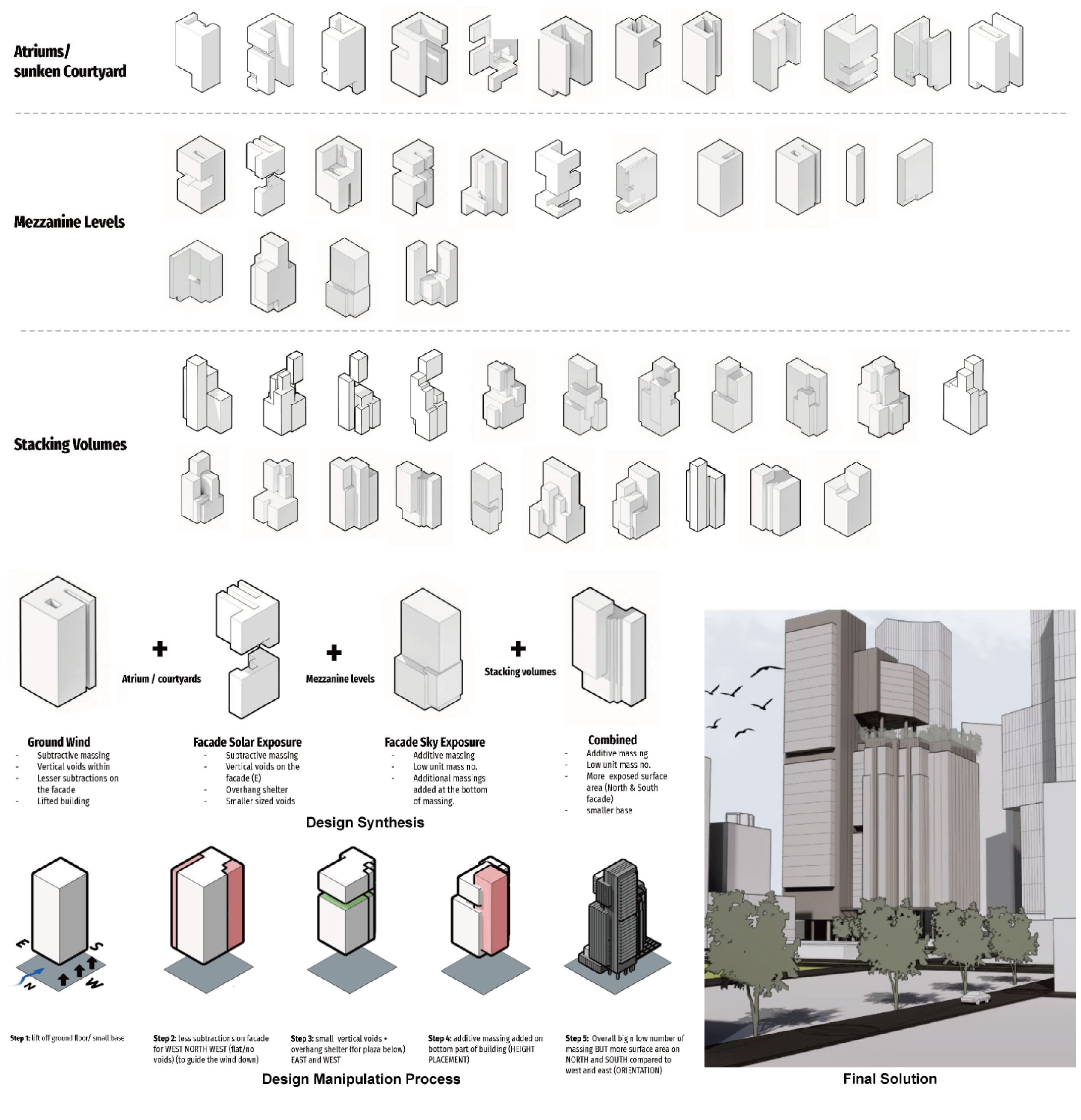
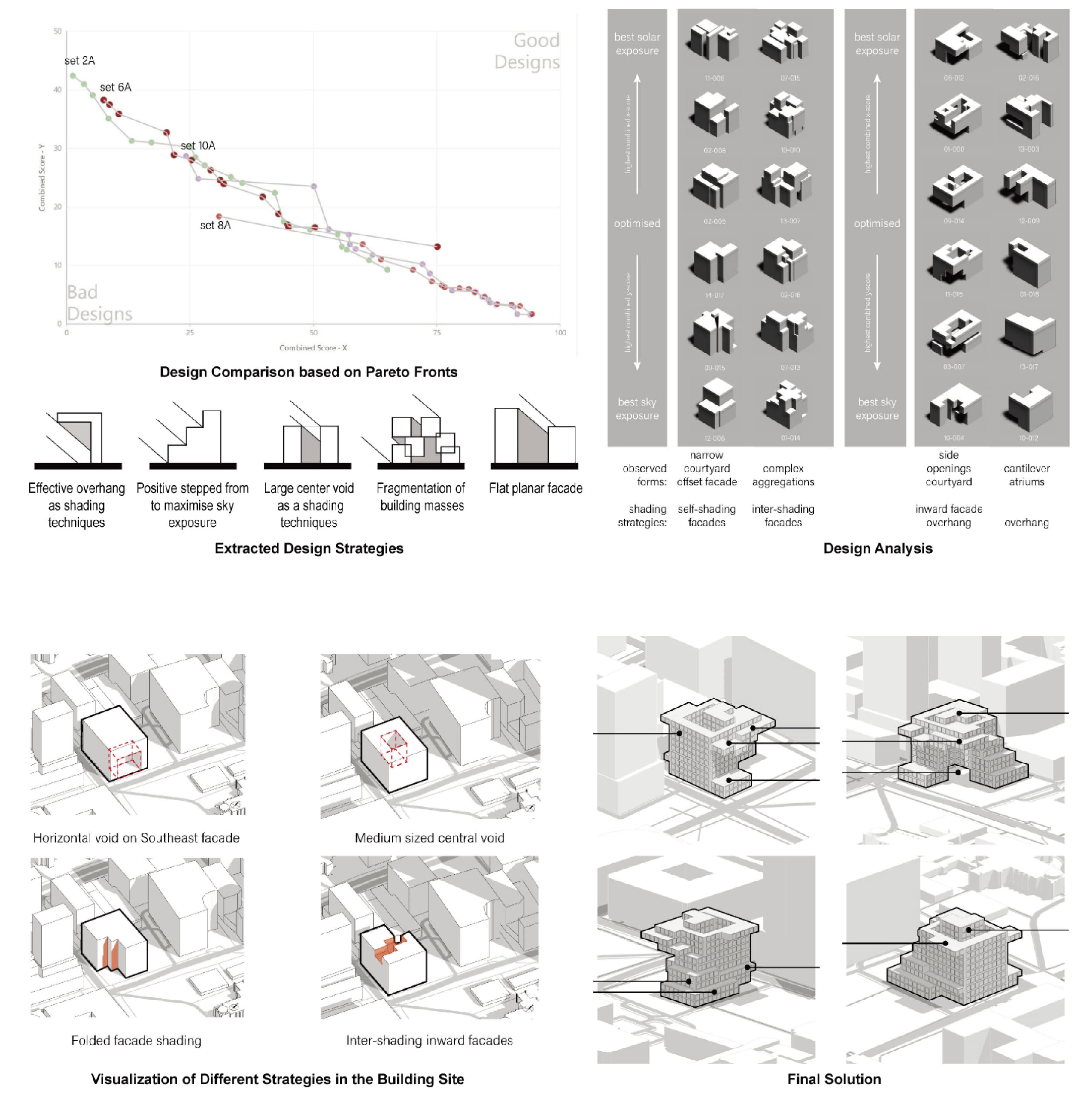
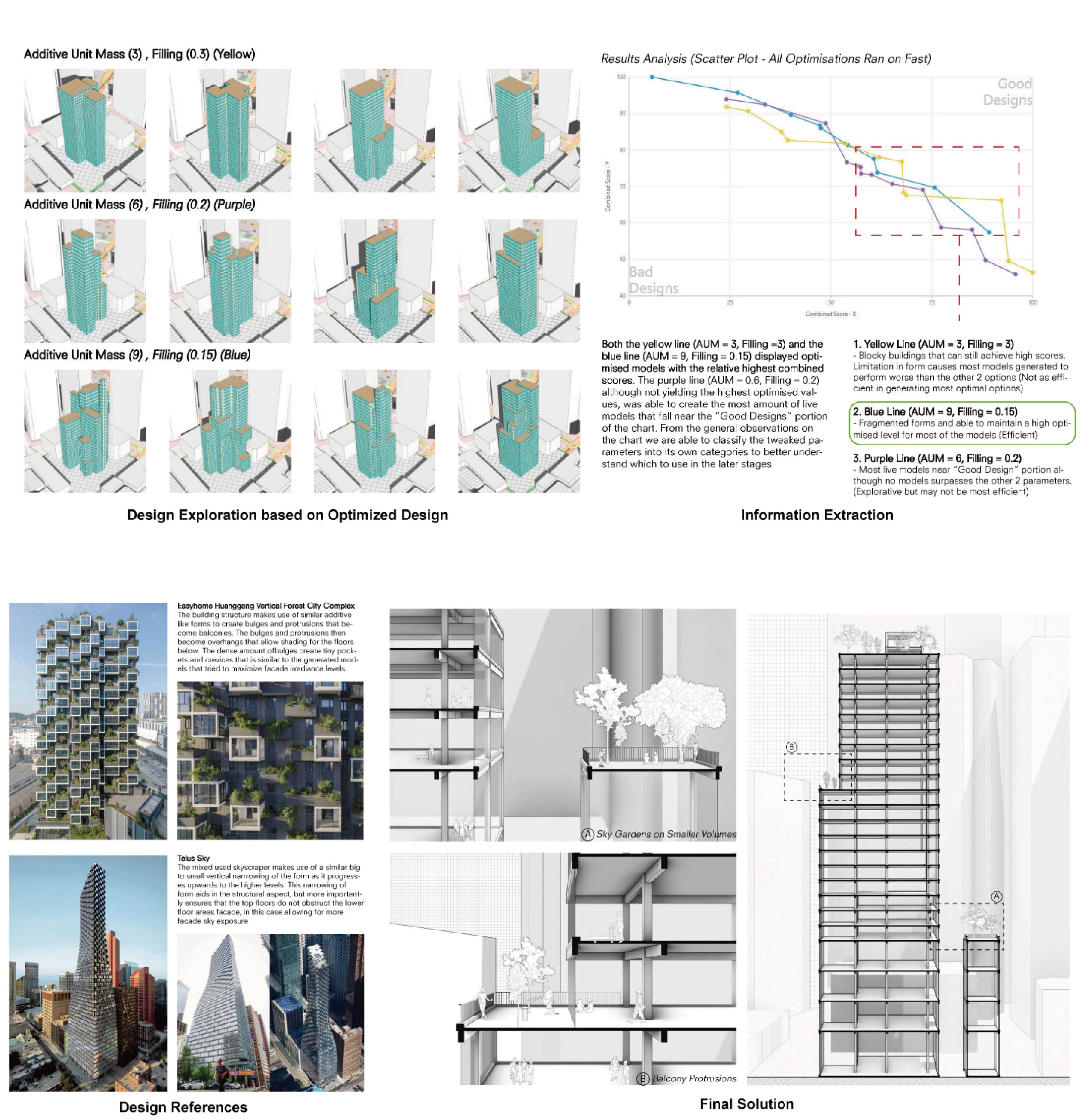
Parallel Design Exploration Based on a Cross-Platform Design Environment | 基于跨平台设计环境的平行设计探索
In this project, students used a cross-platform design environment combining Rhino‑Grasshopper and HDB Evolver to conduct rapid parallel design explorations during the architectural schematic design phase. By setting different building massing prototypes with EvoMass, they optimized performance under various building and environmental conditions. Finally, through analyzing the optimization results, they extracted key design insights and completed the design solutions accordingly. | 在本项目中,学生使用结合 Rhino‑Grasshopper 与 HDB Evolver 的跨平台设计环境,针对建筑方案阶段开展快速的平行设计探索。 通过在EvoMass中设置不同的建筑体量原型,学生对多种建筑与环境条件下的性能进行优化。最终,通过对优化结果的分析,提取关键的设计洞见,并据此完成设计方案。
Mixed-Use + Environmental Performance | 混合使用+环境性能 | 2022
Nanjing University of Art Workshop | 南京艺术学院工作营
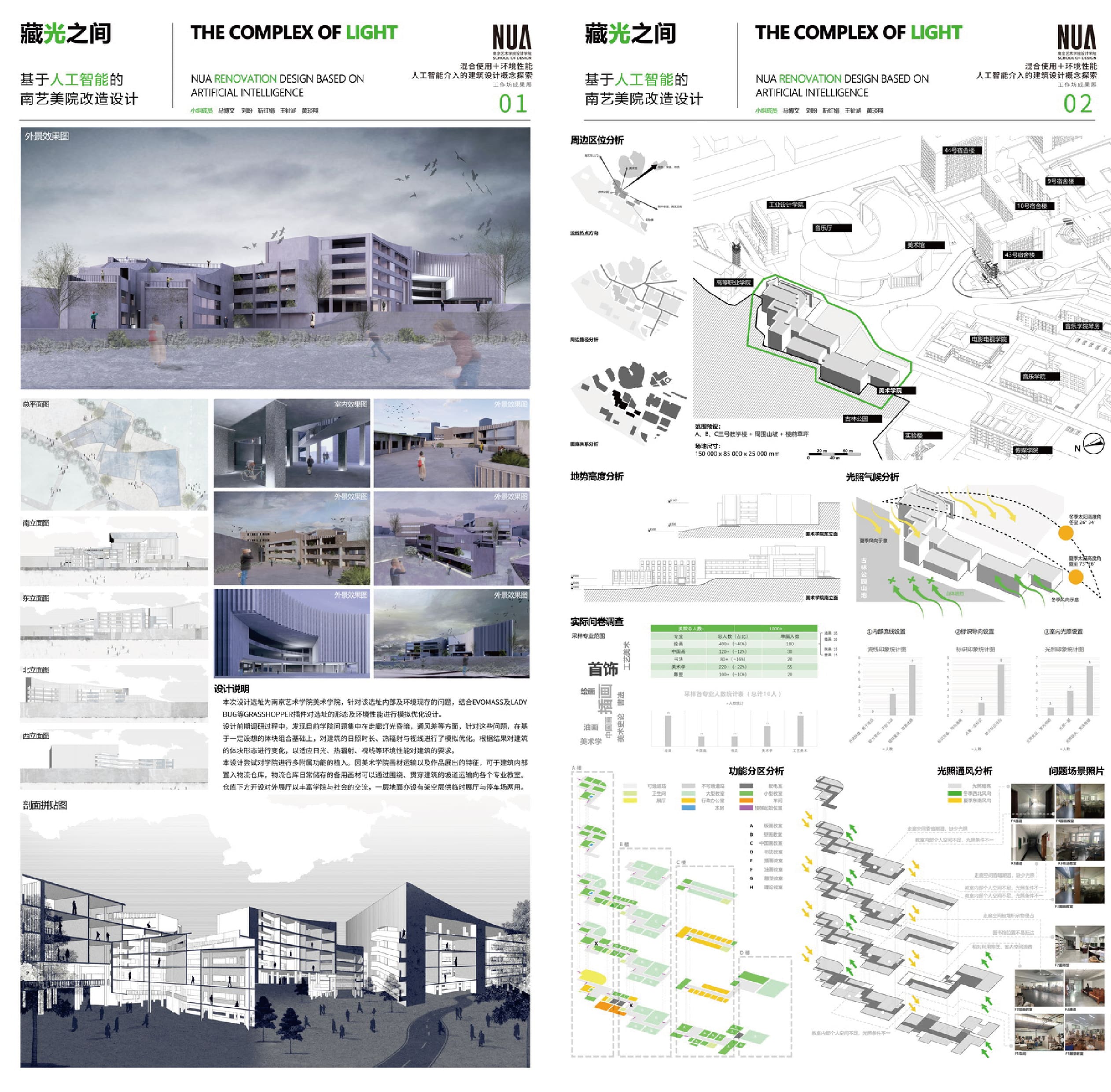
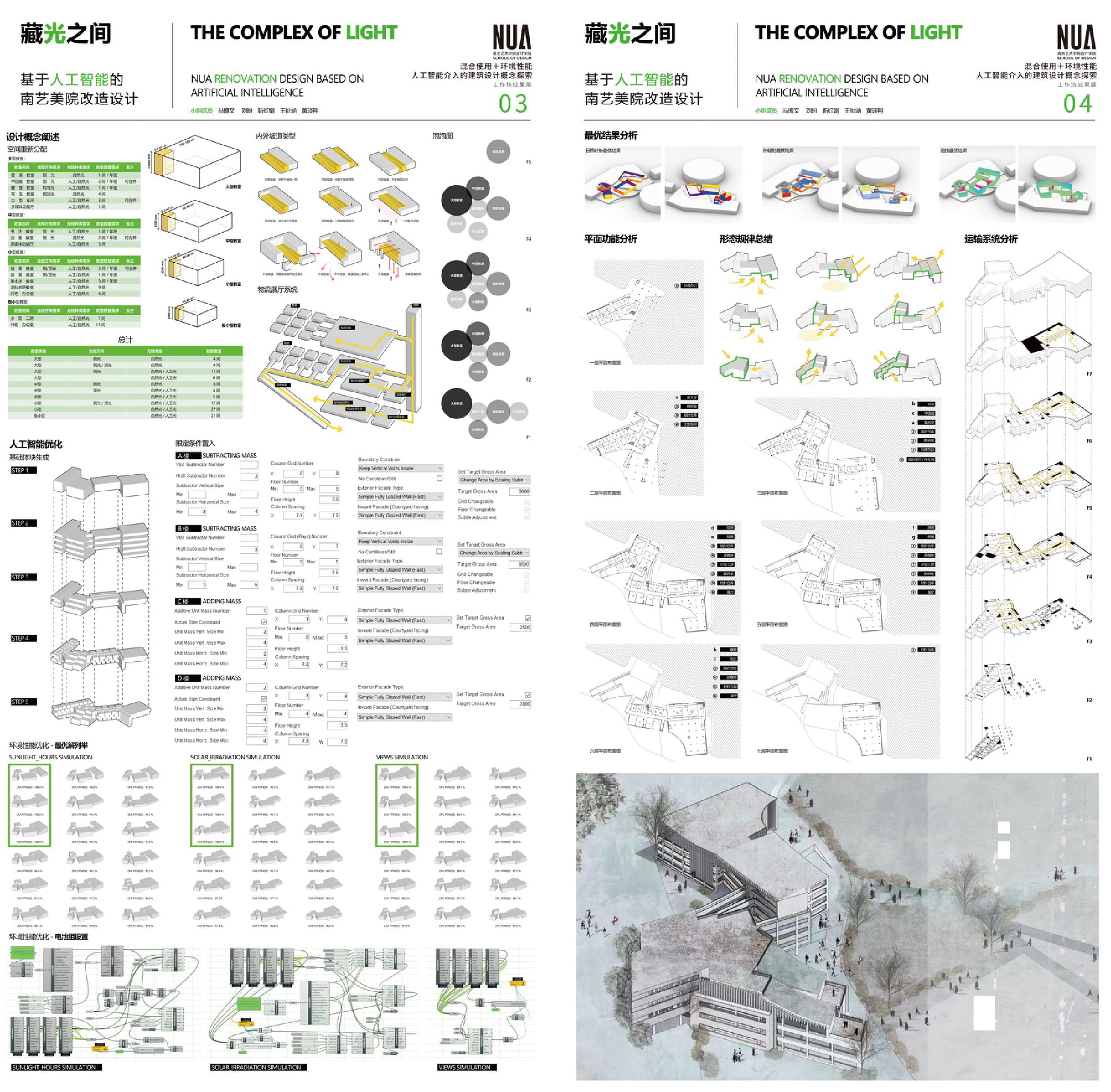
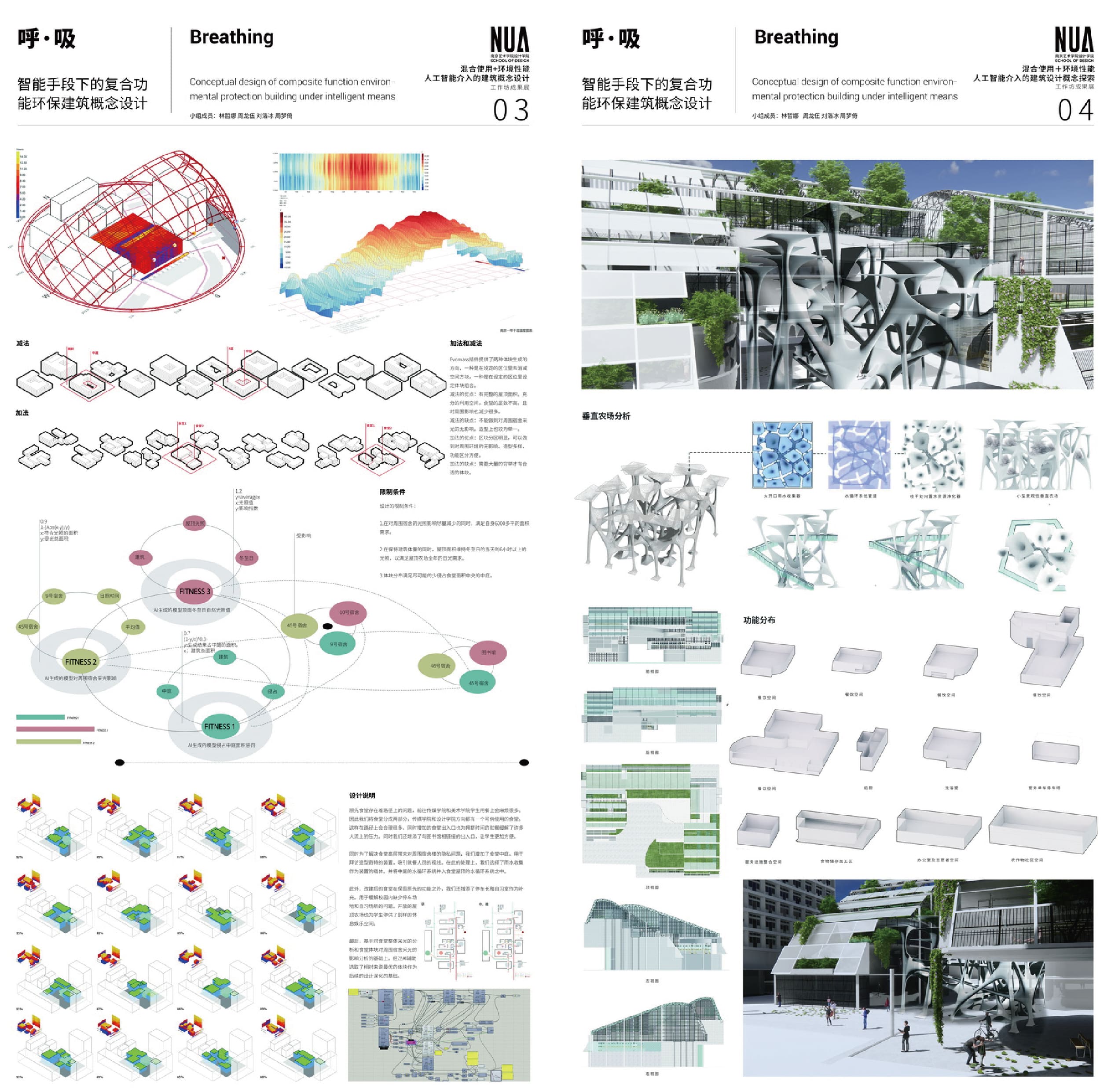
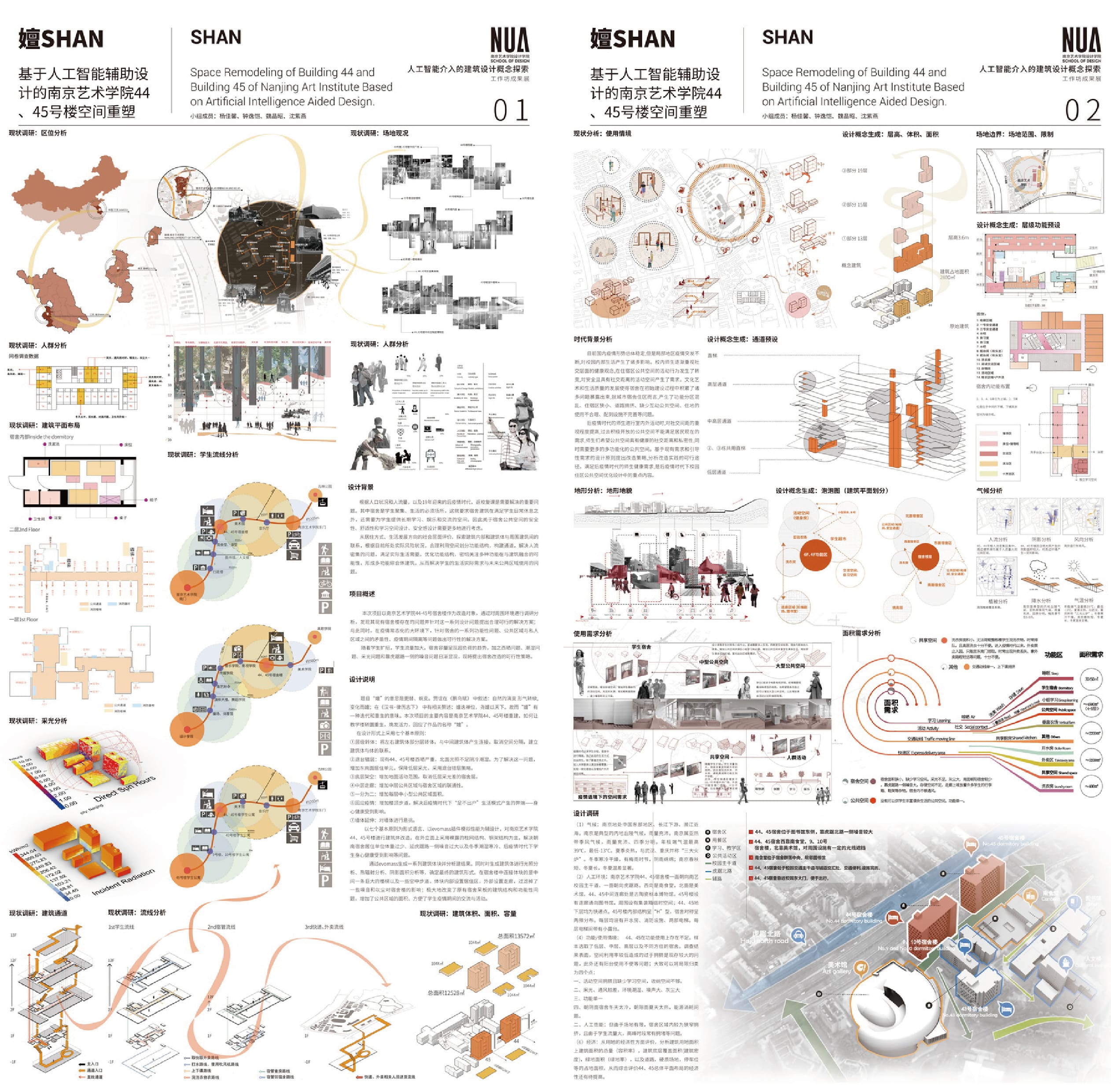
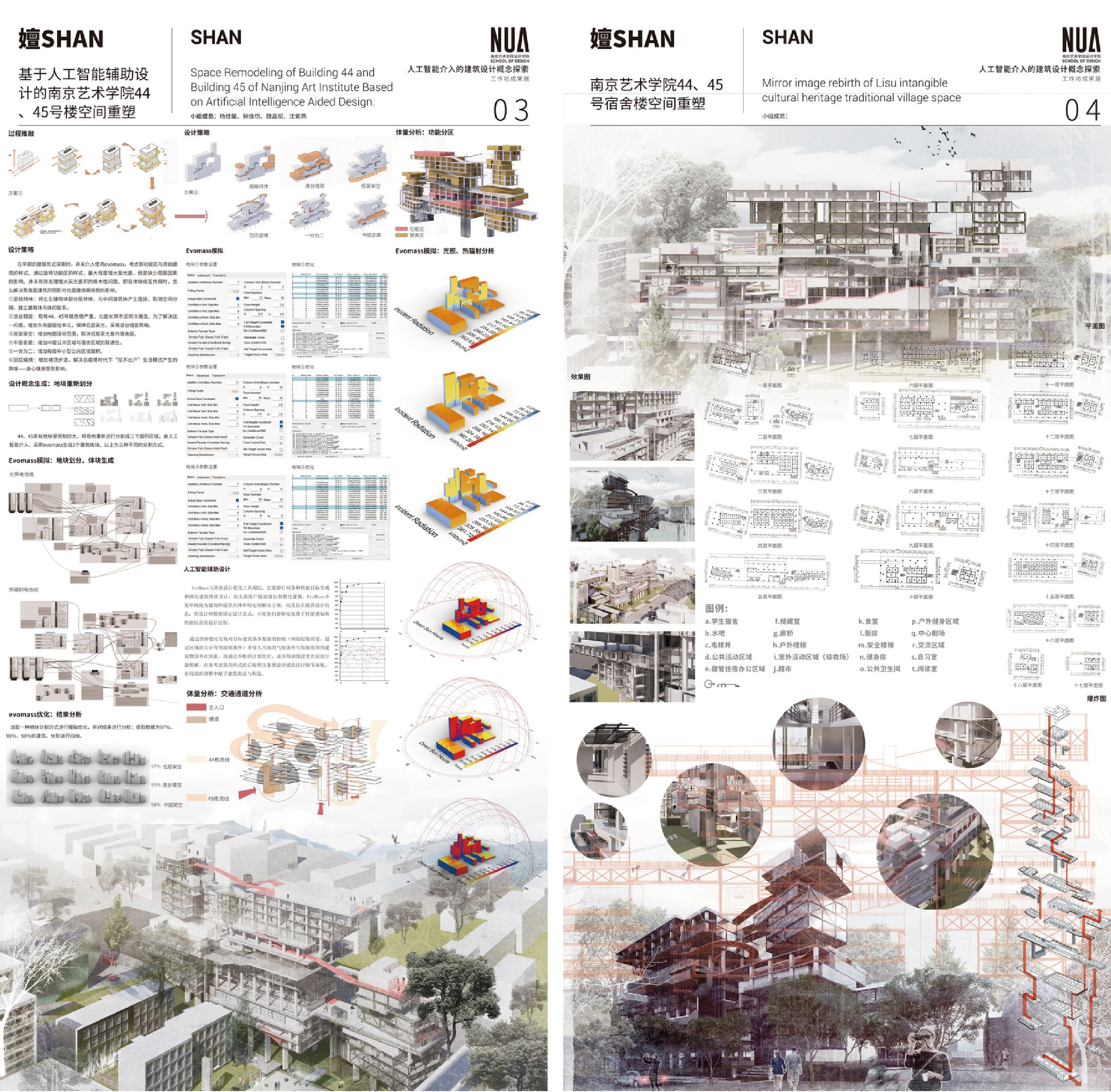
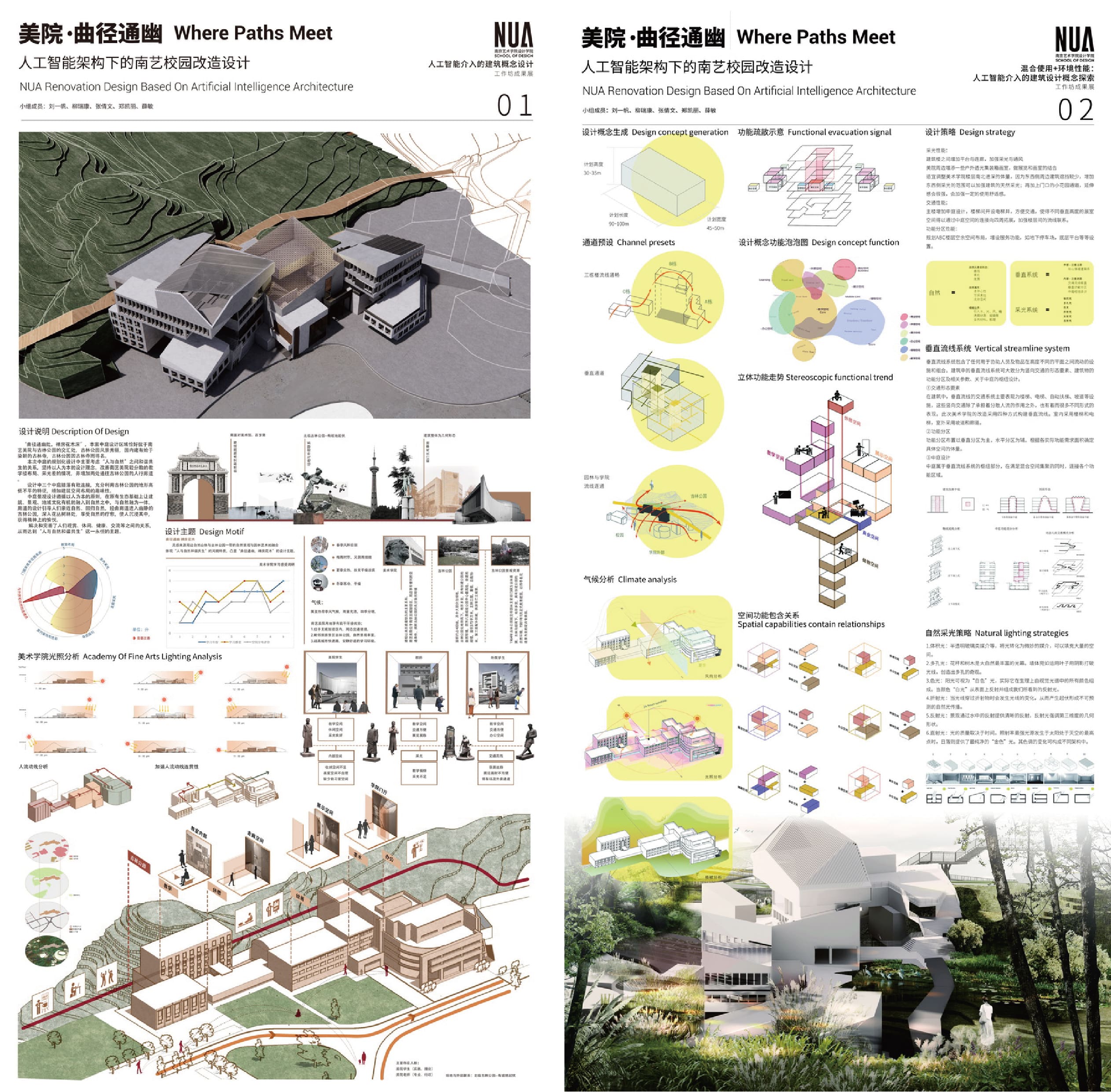
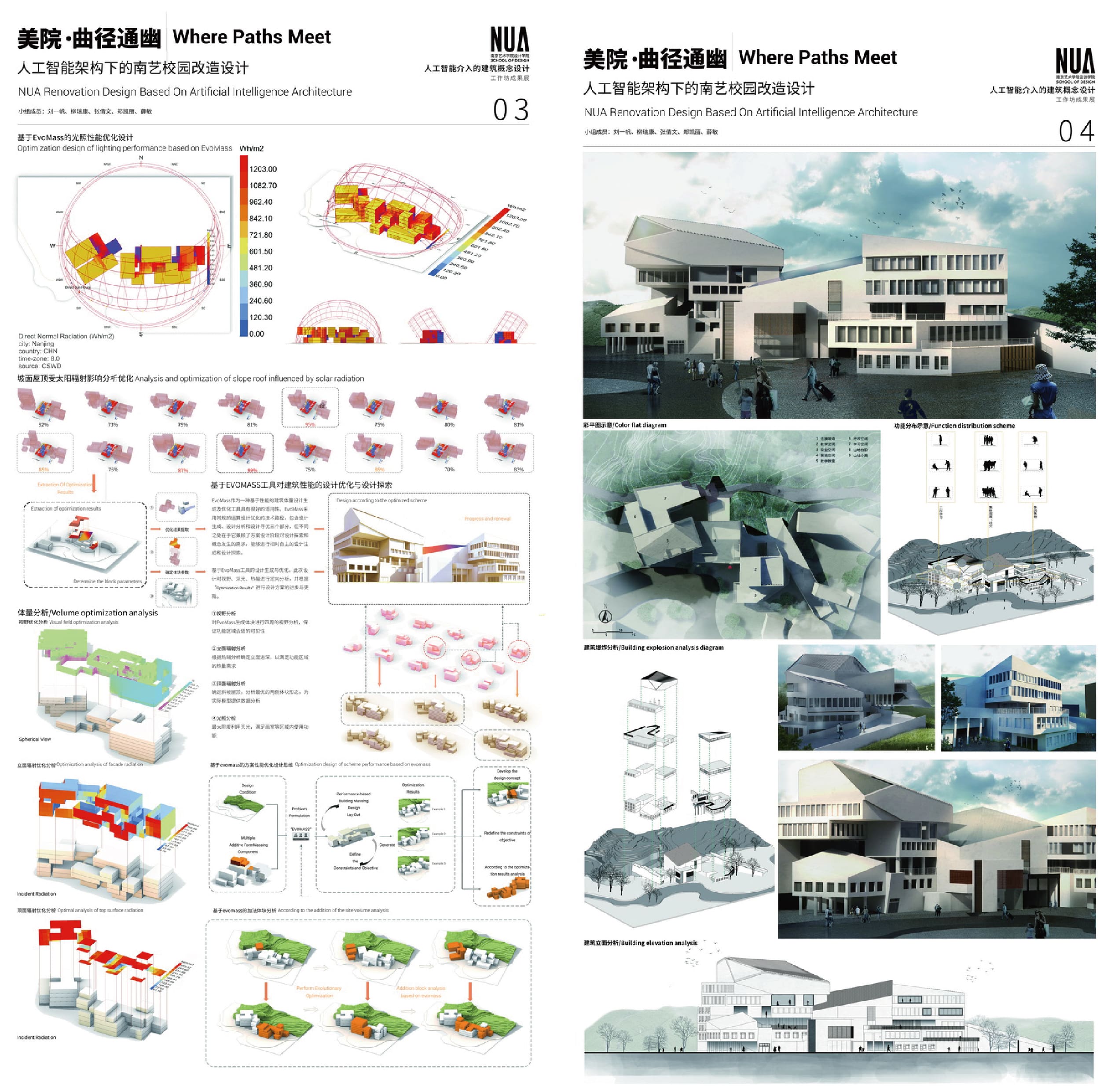
Bringing Optimization into Design Conceptualization | 将优化融入设计概念推敲
In this workshop, participants first proposed preliminary mixed-use concepts based on site and building typology, and then used EvoMass to rapidly define parametric design prototypes of these concepts. Unlike other cases, this workshop emphasizes that designers first develop preliminary design concepts, and on this basis, use EvoMass to integrate environmental performance into the development and deepening of the design. | 在该工作营中, 参与者首先根据场地与建筑类型提出初步的混合使用概念,随后利用 EvoMass 对这些概念进行快速的参数化设计原型定义。 与其他案例不同,本工作营强调设计师先提出初步设计概念,在此基础上通过 EvoMass 将环境性能融入设计的发展与深化过程之中。
Residential Precinct Layout Generation | 住宅区布局生成模型 | 2021 - 2022
Subproject of the HDB Evolver Project | HDB Evolver 项目子课题
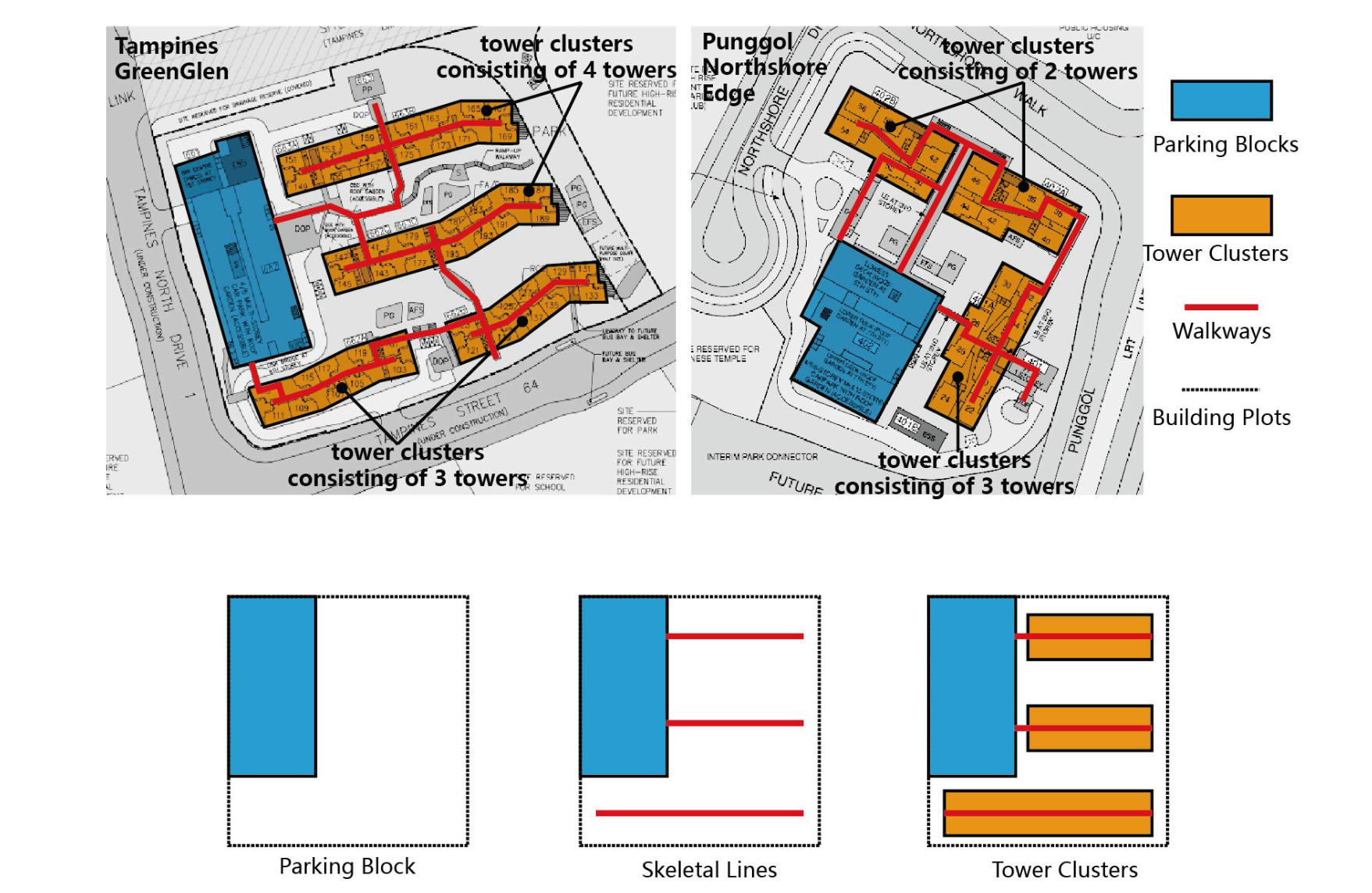
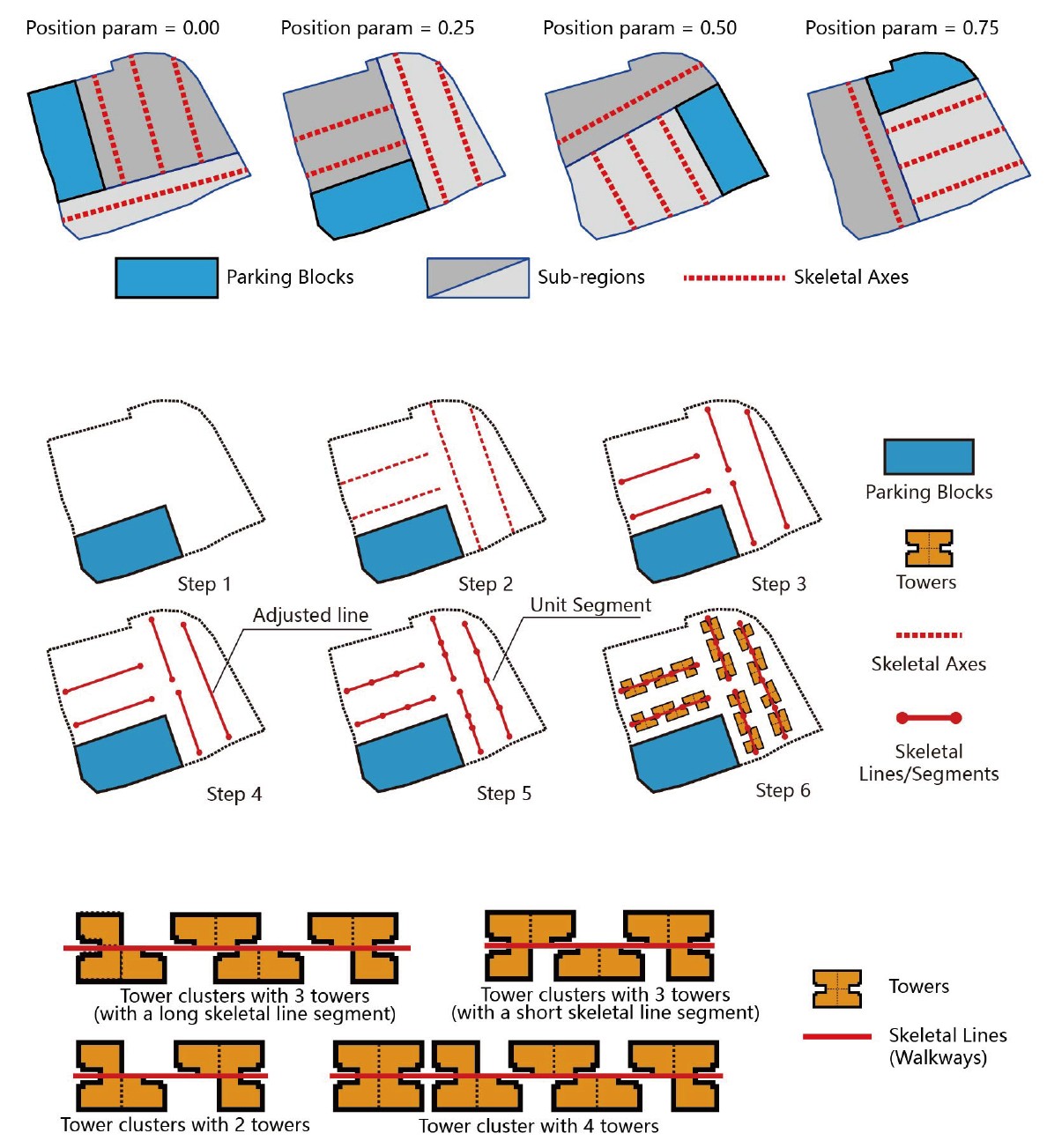
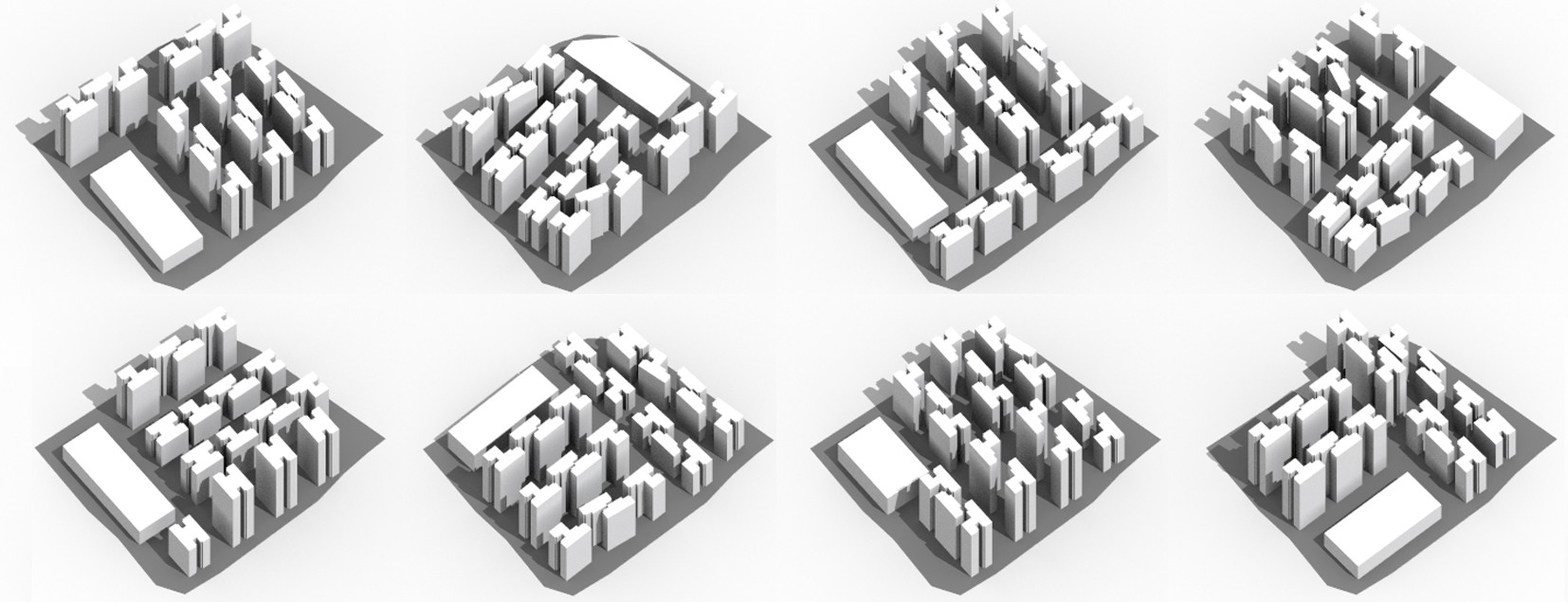
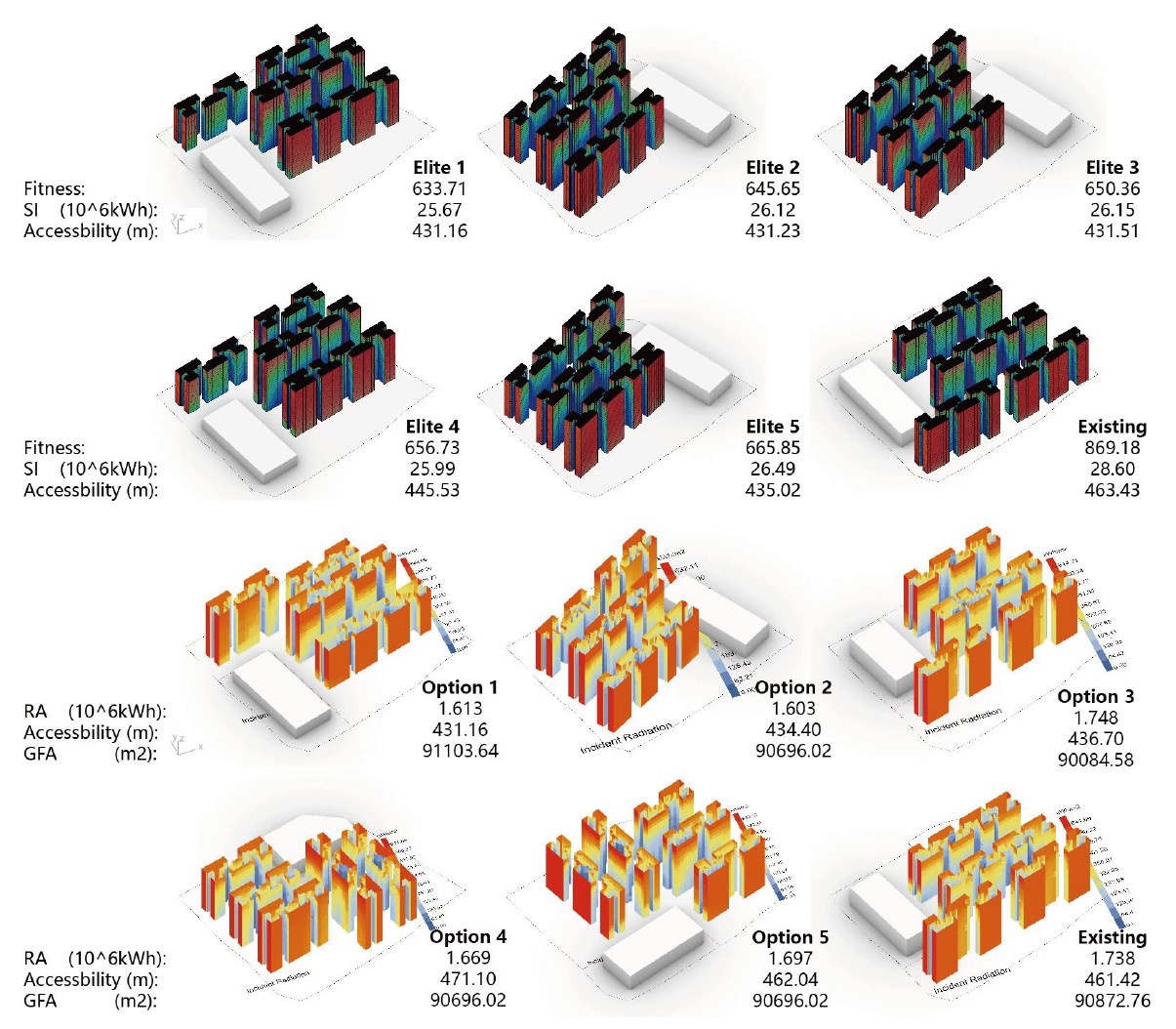
Skeletal Modeling for Building Layout Generation | 面向建筑布局生成的骨架建模
This project aims to develop a generative model that can adapt to different site plots and generate residential precinct layouts with reasonable spatial organizational order. The model uses the corridor as an organizational device—a common feature in Singapore's public residential developments for building connectivity and organization—and abstracts it into skeletal lines for layout generation. By varying the length, position, and angle of these skeletal lines, the model can generate flexible and diverse residential precinct layouts while maintaining acceptable spatial order. This approach overcomes the limitations of conventional models, which often generate designs lacking proper spatial order or resembling barracks-like arrangements. | 本项目旨在开发一个能够适应不同场地地块并生成具有合理空间组织秩序的住宅区布局的生成模型。该模型将连廊作为一种组织装置——这是新加坡公共住宅开发项目中常 见的建筑连通与组织方式——并将其抽象为用于布局生成的骨架线。通过改变这些骨架线的长度、位置和角度,模型能够生成灵活多样的住宅区布局,同时保持良好的空间秩序。该方法克服了 传统模型的局限性,后者生成的设计往往缺乏合理的空间秩序,或呈现类似兵营般的布局。
Massing-Facade Integrated Design Optimization | 建筑体量-表皮的集成化设计优化 | 2021 - 2022
Independent Research Project | 个人研究项目
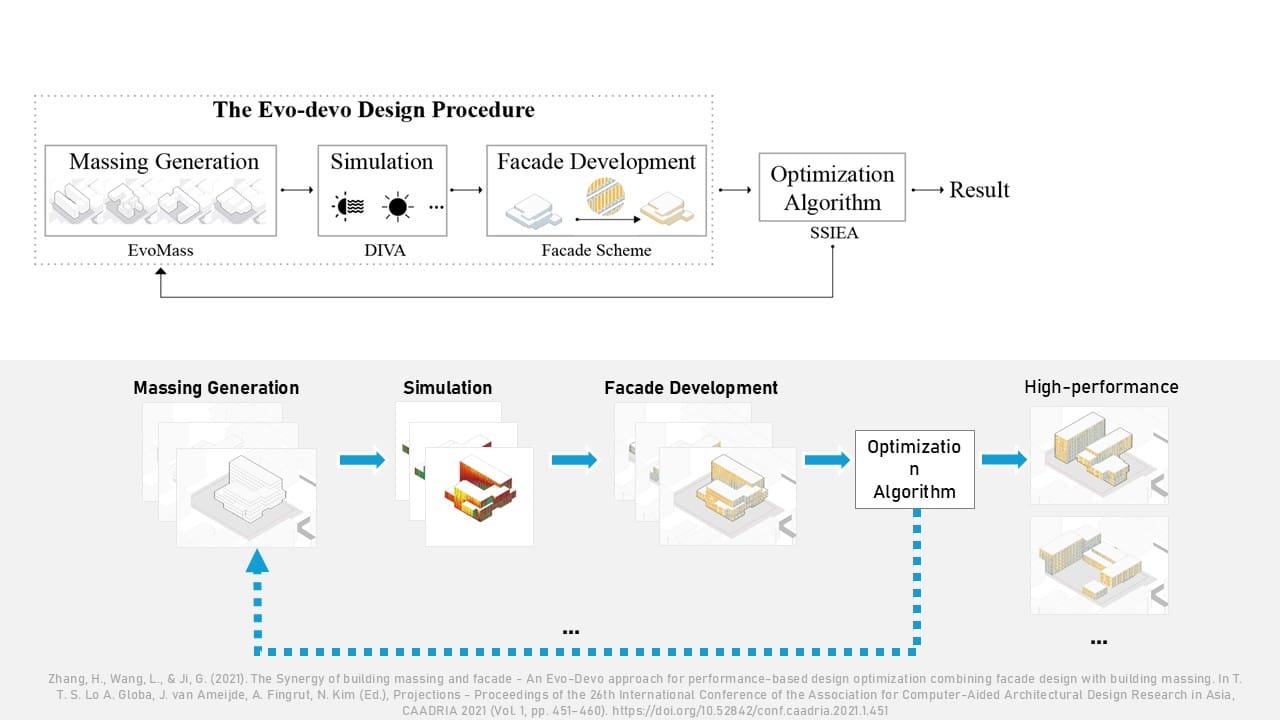
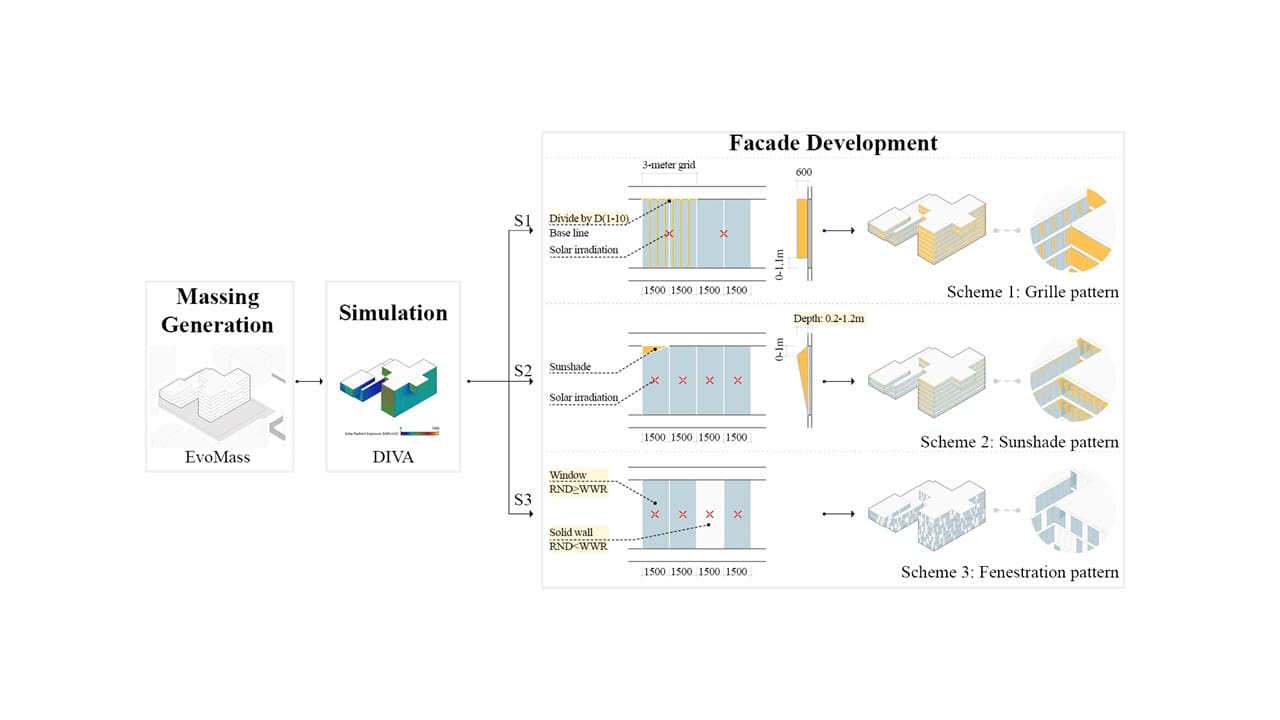
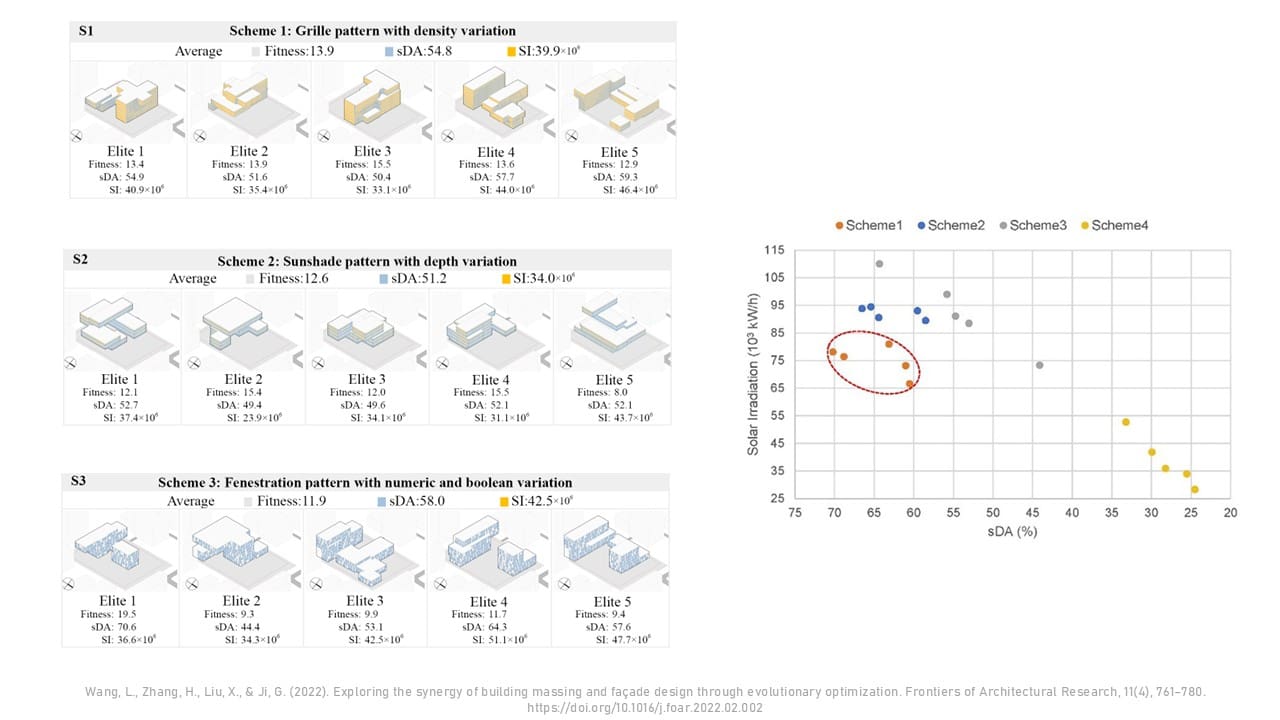
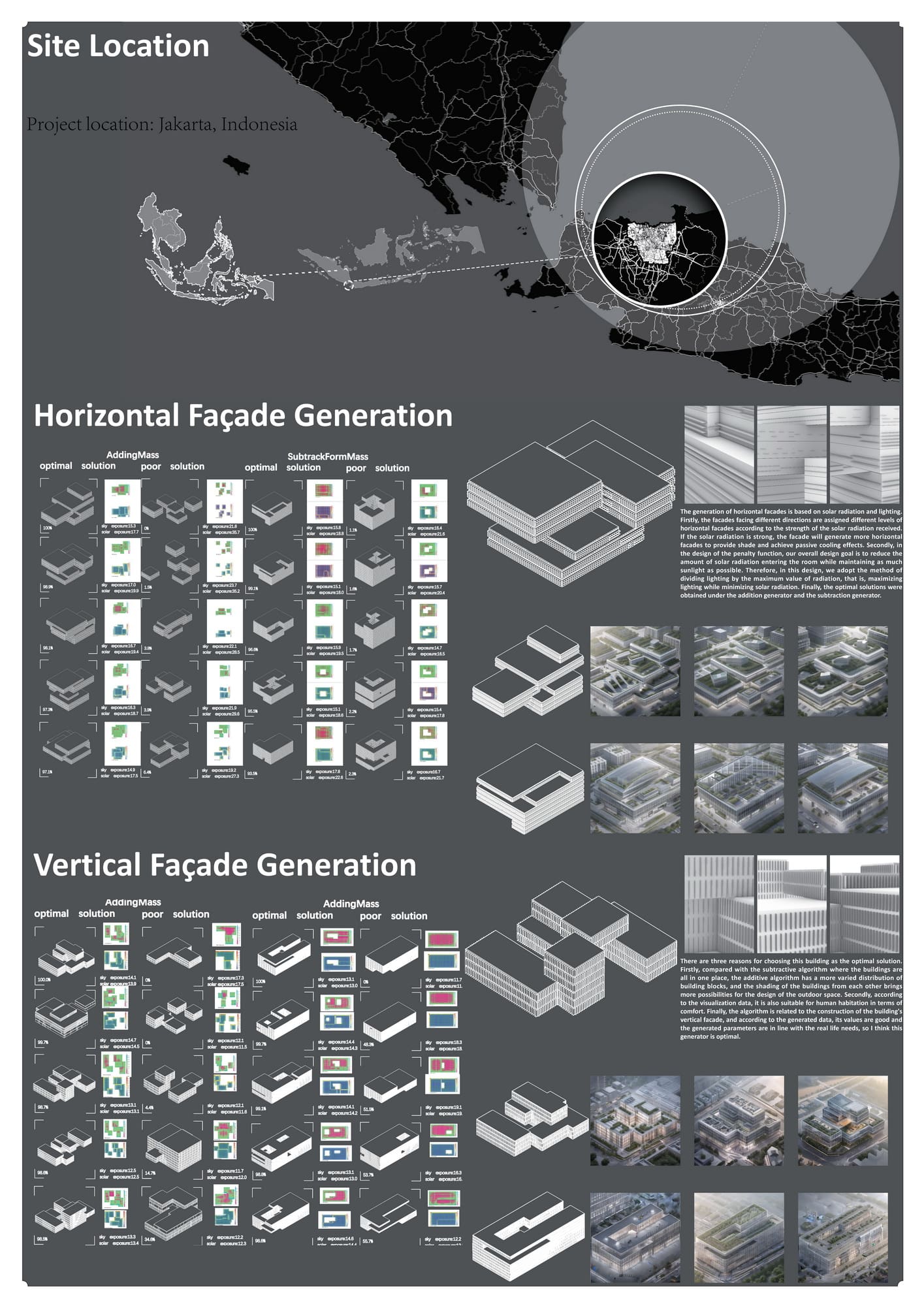
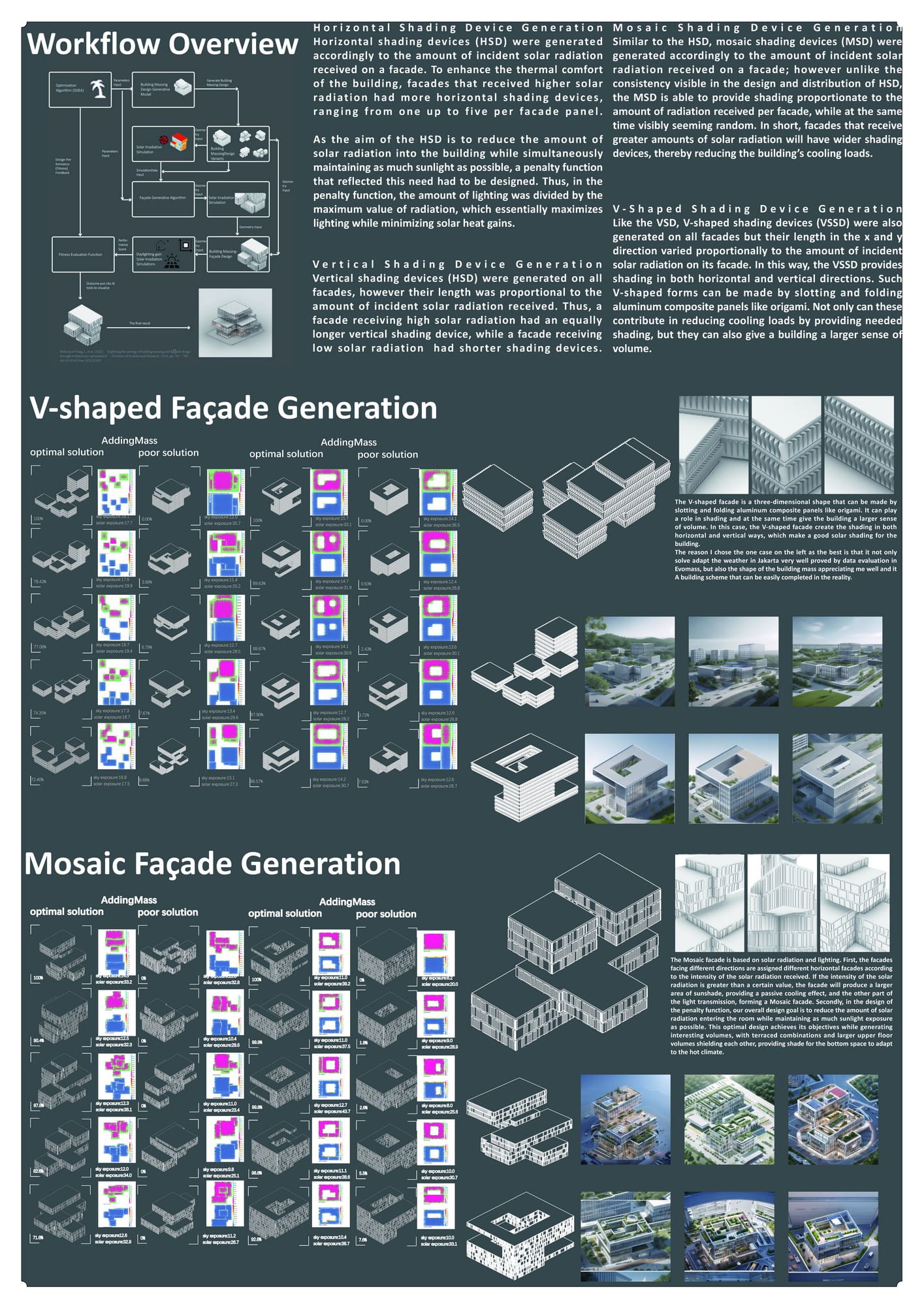
Hybrid Explicit–Implicit Design Generation for Adaptive Massing–Facade Co‑evolution | 显式-隐式混合设计生成:体量与表皮的适应性协同演化
In this project, we explore how to achieve a co-evolution of building massing and facade. The optimization employs a hybrid design generation method that combines explicit and implicit strategies, allowing the building facade to adapt to varying massing forms. The optimization result reveals how the facade can, in turn, influence the evolution of the building massing, as well as the adaptability between different massing forms and facade schemes. | 在本项目中,我们探索如何实现建筑体量与表皮的协同进化。 优化过程采用了一种混合设计生成方法,结合了显式与隐式两种生成策略,使建筑表皮能够适应多变的体量形态。该优化揭示了表皮如何反过来影响建筑体量的演化, 以及不同体量形态与表皮方案之间的适应关系。/p>
Rapid Performance-Based Architectural Design | 基于性能的快速建筑设计 | 2021
DigitalFUTURES 2021 Workshop | DigitalFUTURES 2021 工作营
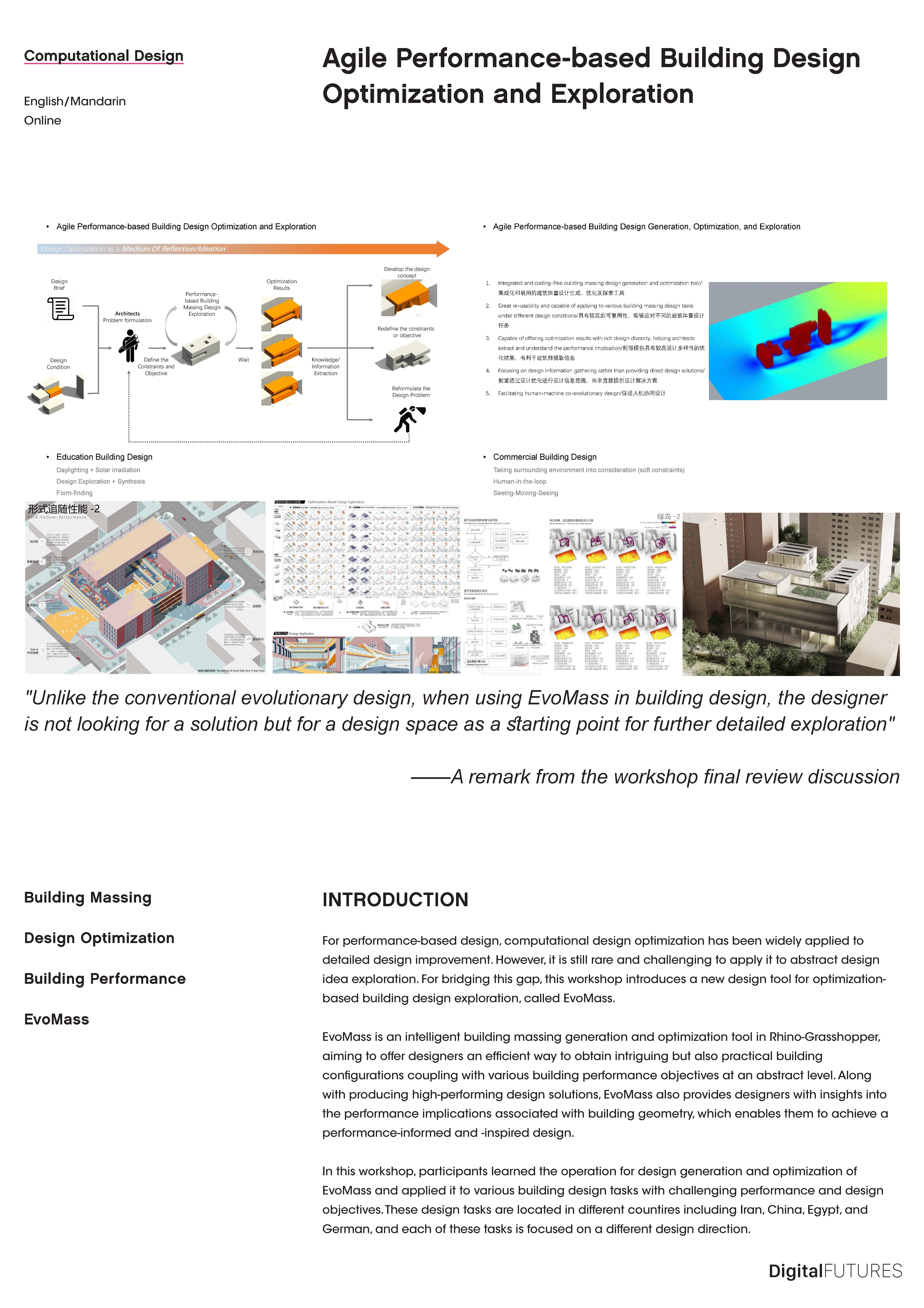
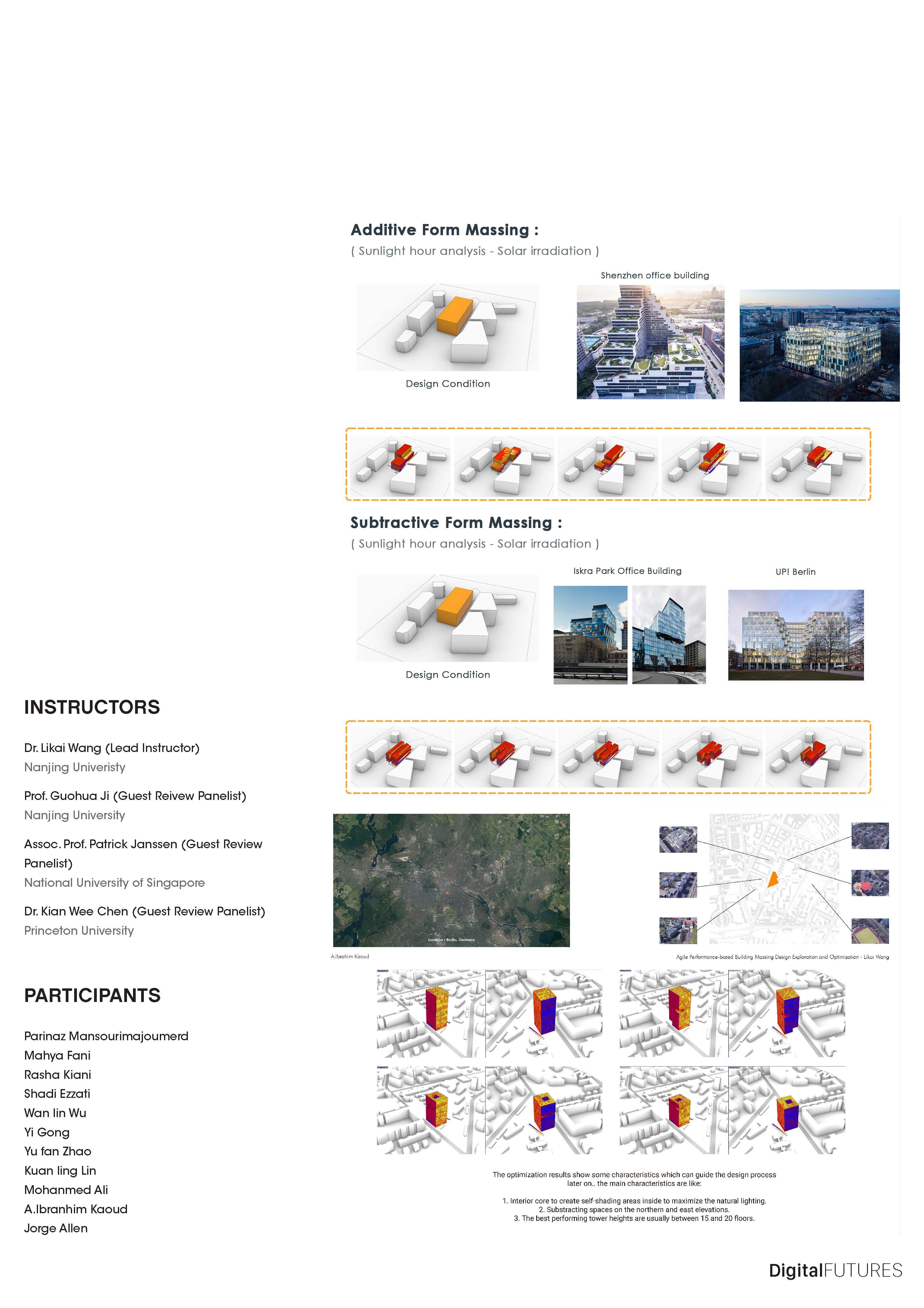
Optimization for Solution-Finding | 以优化寻找设计方案
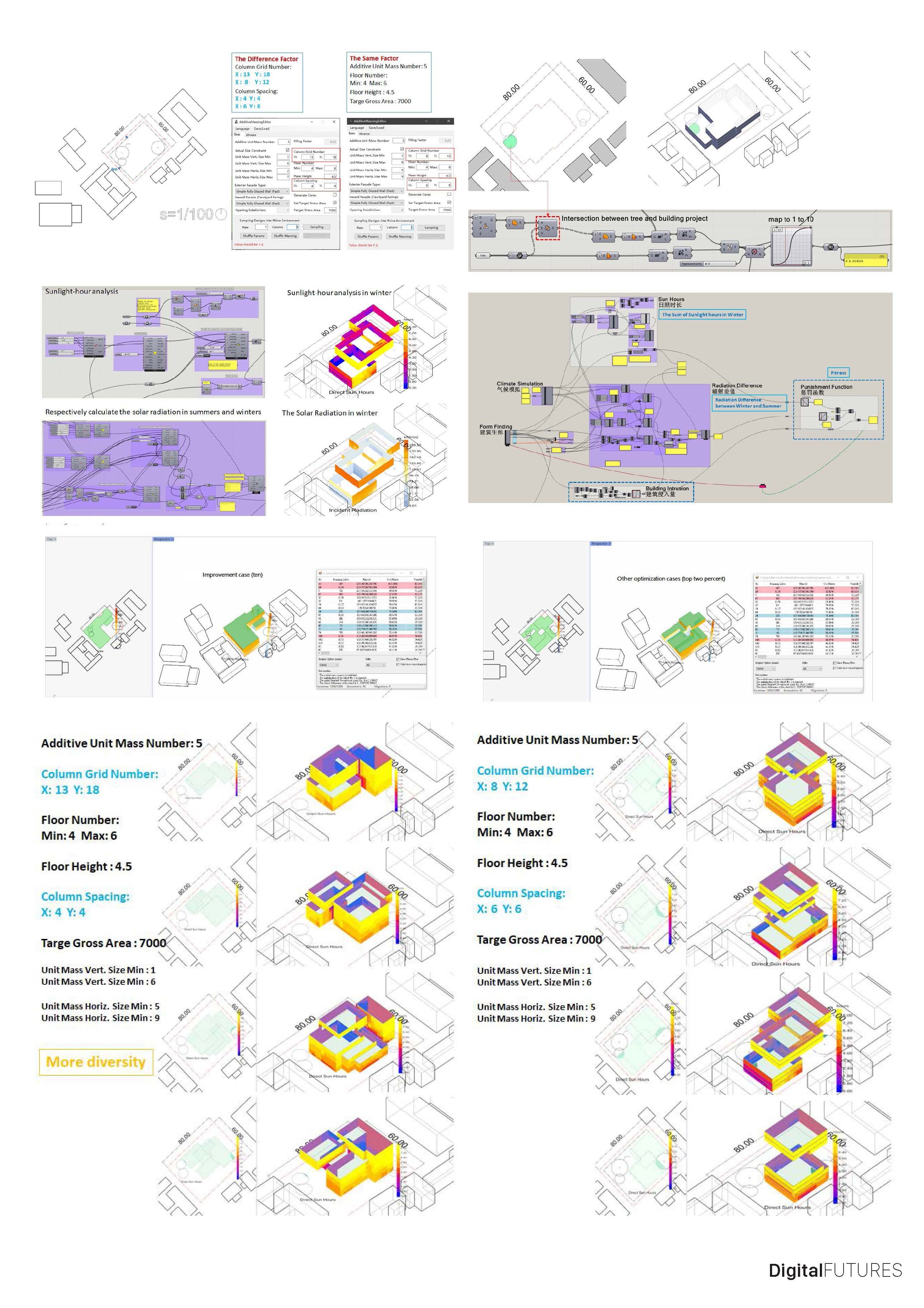
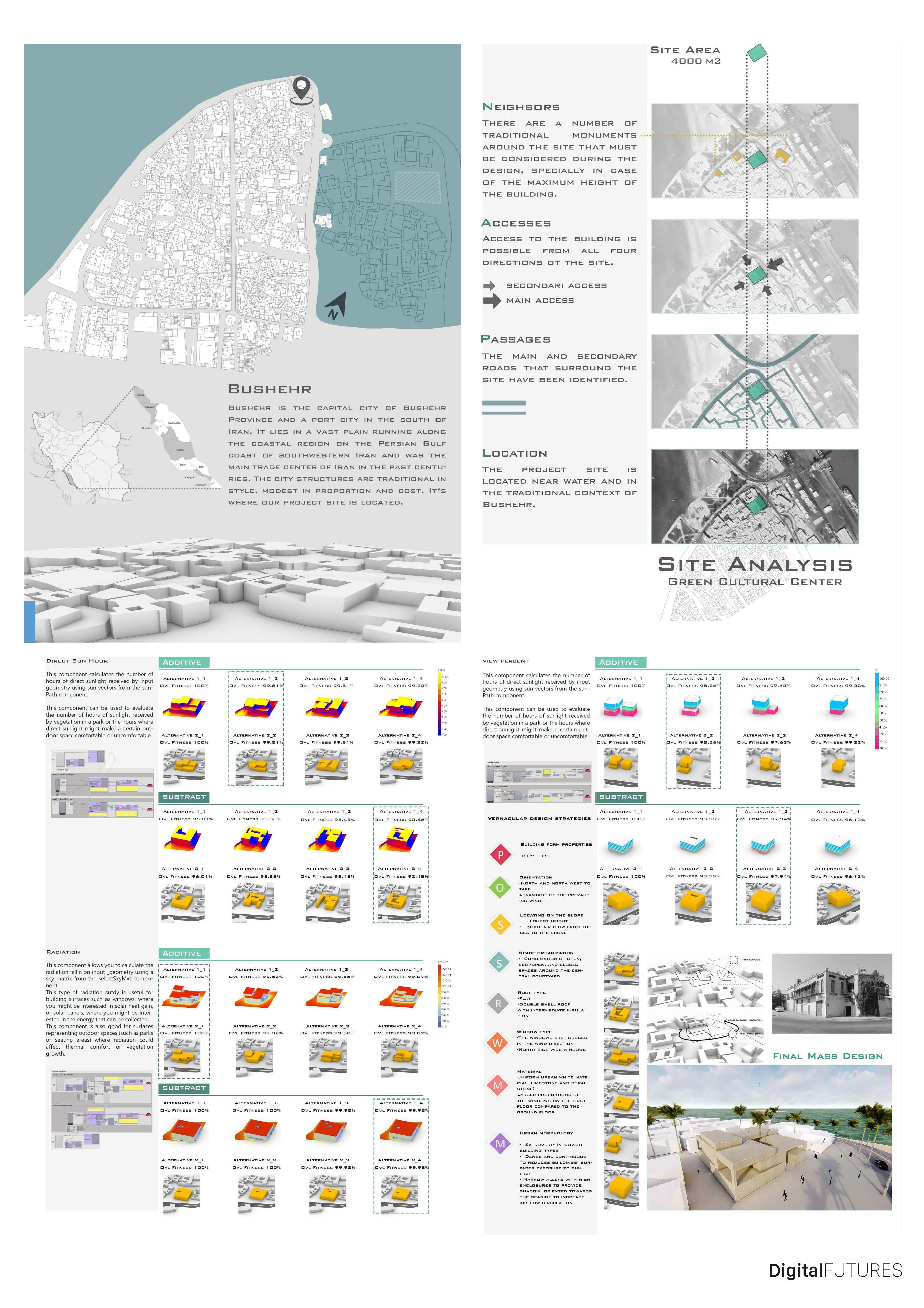
In this workshop, participants used EvoMass for rapid design optimization and analysis, and then applied the optimization results to subsequent design development. Since this project was an early attempt with EvoMass, design optimization still followed the common workflow—using optimization as a means of solution-finding. | 在该工作营中, 参与者使用 EvoMass 进行快速的设计优化与分析,并将优化结果用于后续的设计深化。由于该项目是 EvoMass 的早期尝试,设计优化仍沿用常见的流程, 即将优化作为寻找解决方案的手段。
Performance-Driven Co-Evolution Design | 性能驱动的协同演进设计 | 2020
Undergraduate Design Competition Project | 本科生设计竞赛项目
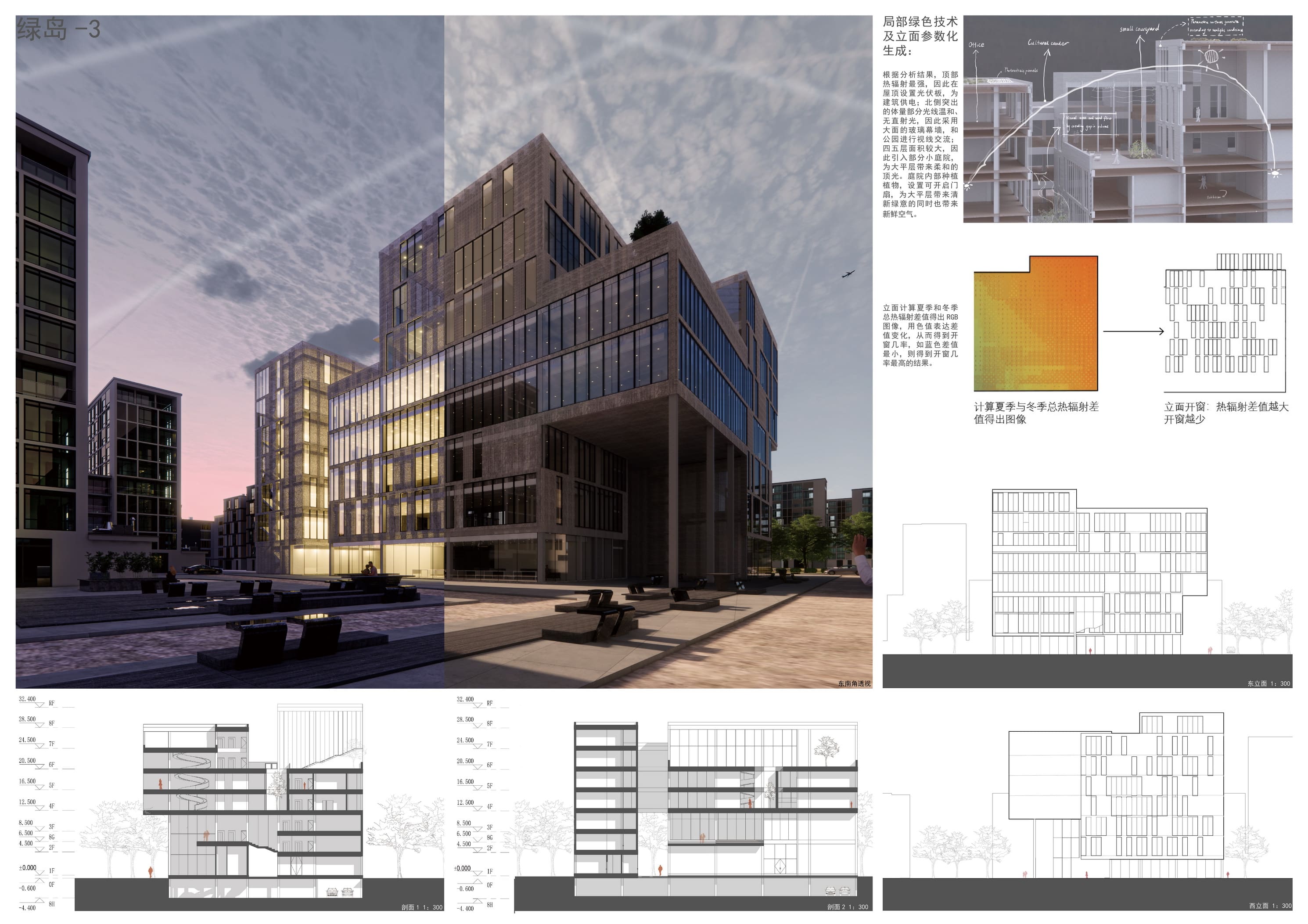
How Optimization Shapes Problem-Framing | 由优化塑造设计问题的建构
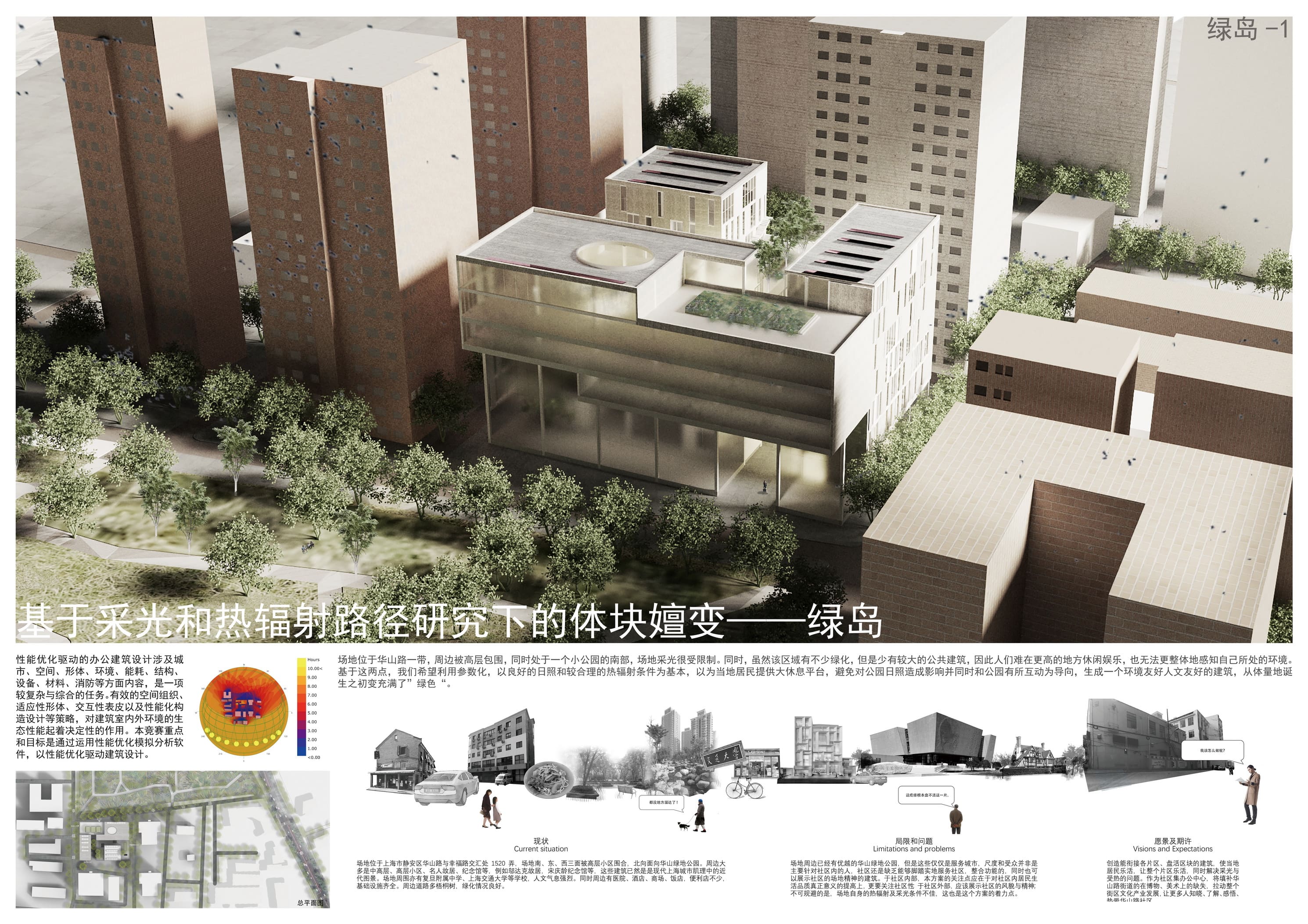
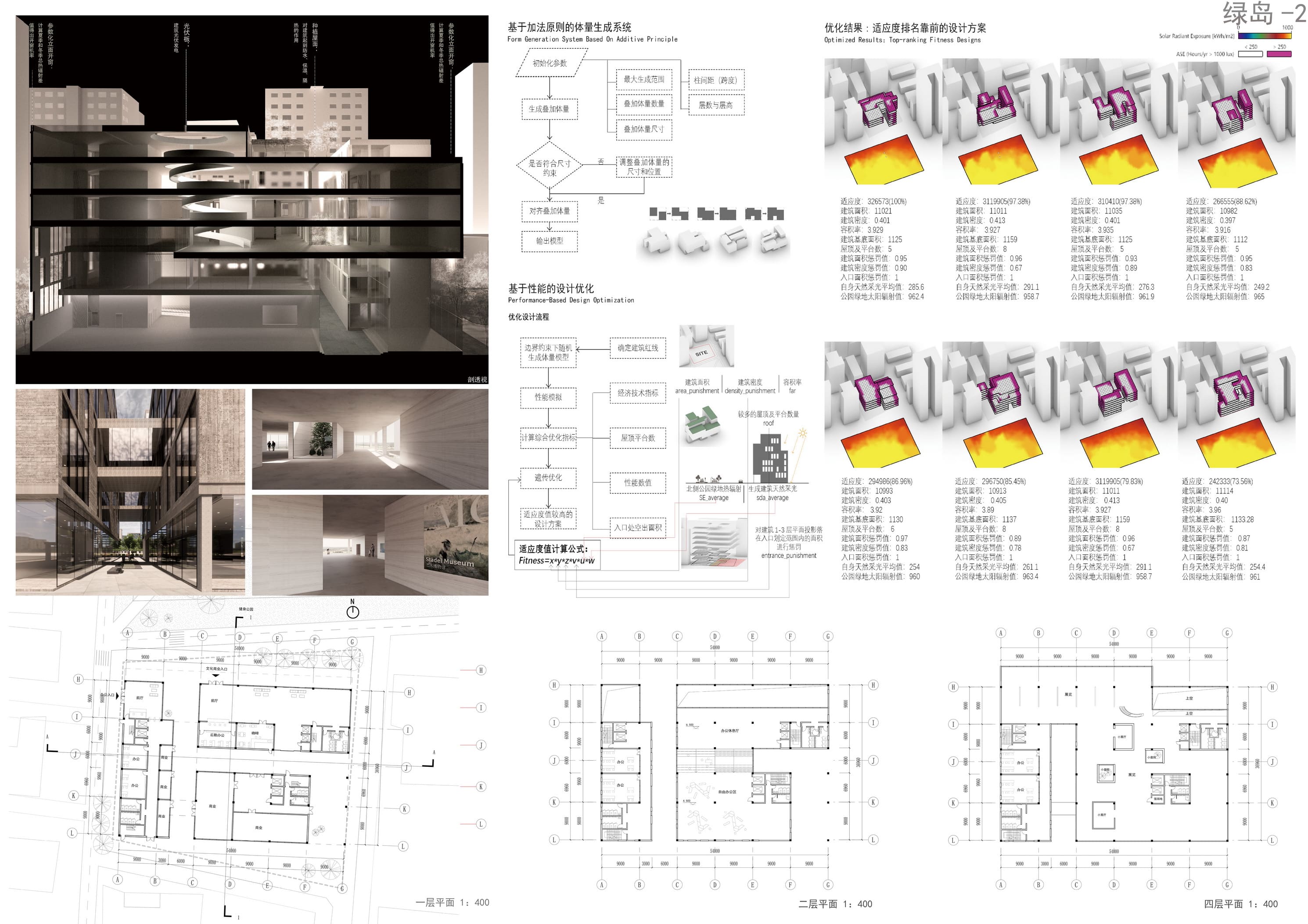
In this design, the designer continuously discovers new design problems and objectives through EvoMass-based building massing optimization, and incorporates design goals beyond performance into the optimization process via soft constraints, thereby achieving a co-evolution process between design solutions and design problems. | 在该设计中,设计师借助基于EvoMass的建筑体量优化,不断发现新的设计问题与目标,并通过软性约束的方式, 将性能以外的设计目标纳入优化过程,从而实现设计方案与设计问题的协同演进。
Form Follows Performance | 形式追随性能 | 2020
Postgraduate Design Competition Project | 研究生设计竞赛项目
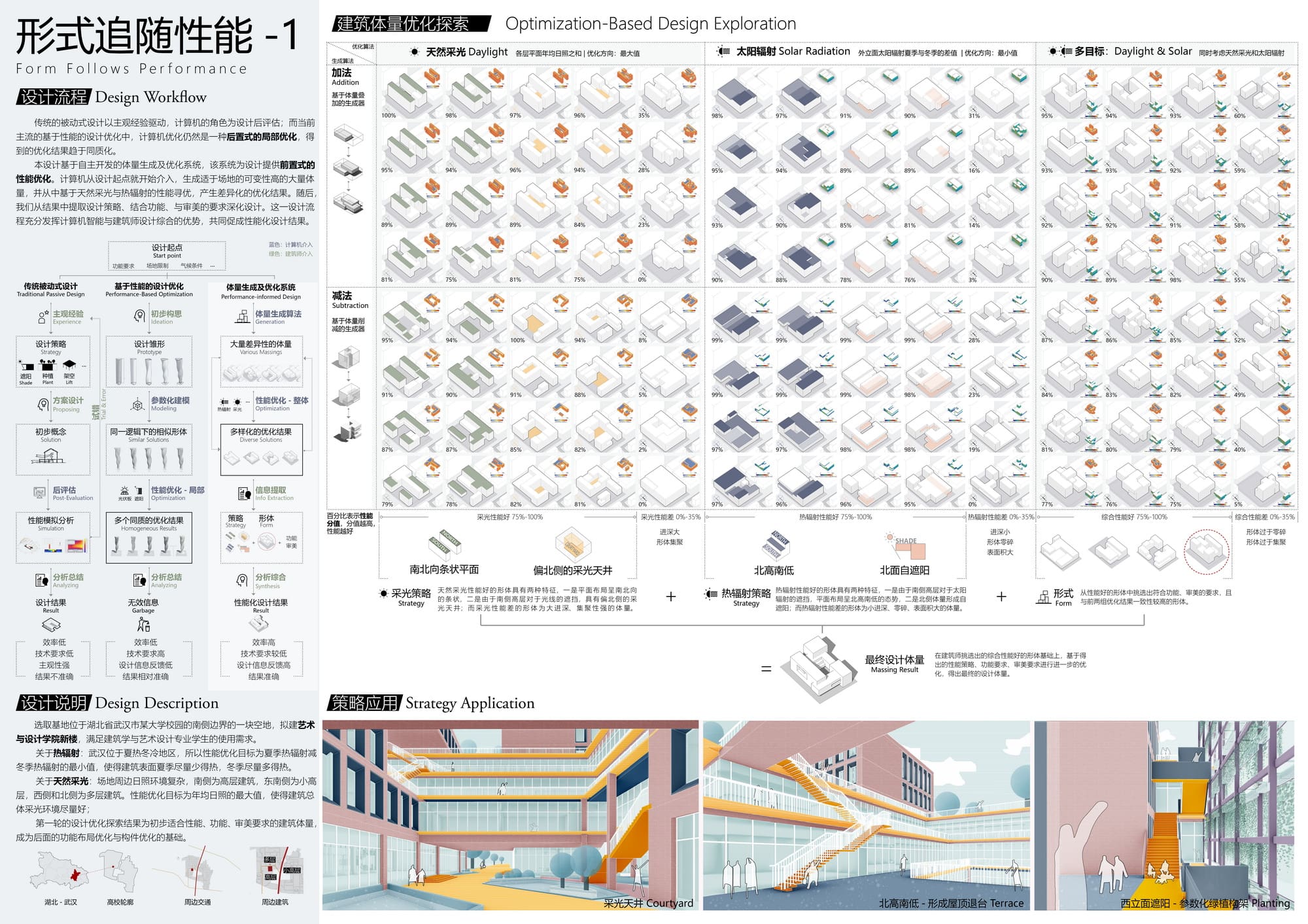
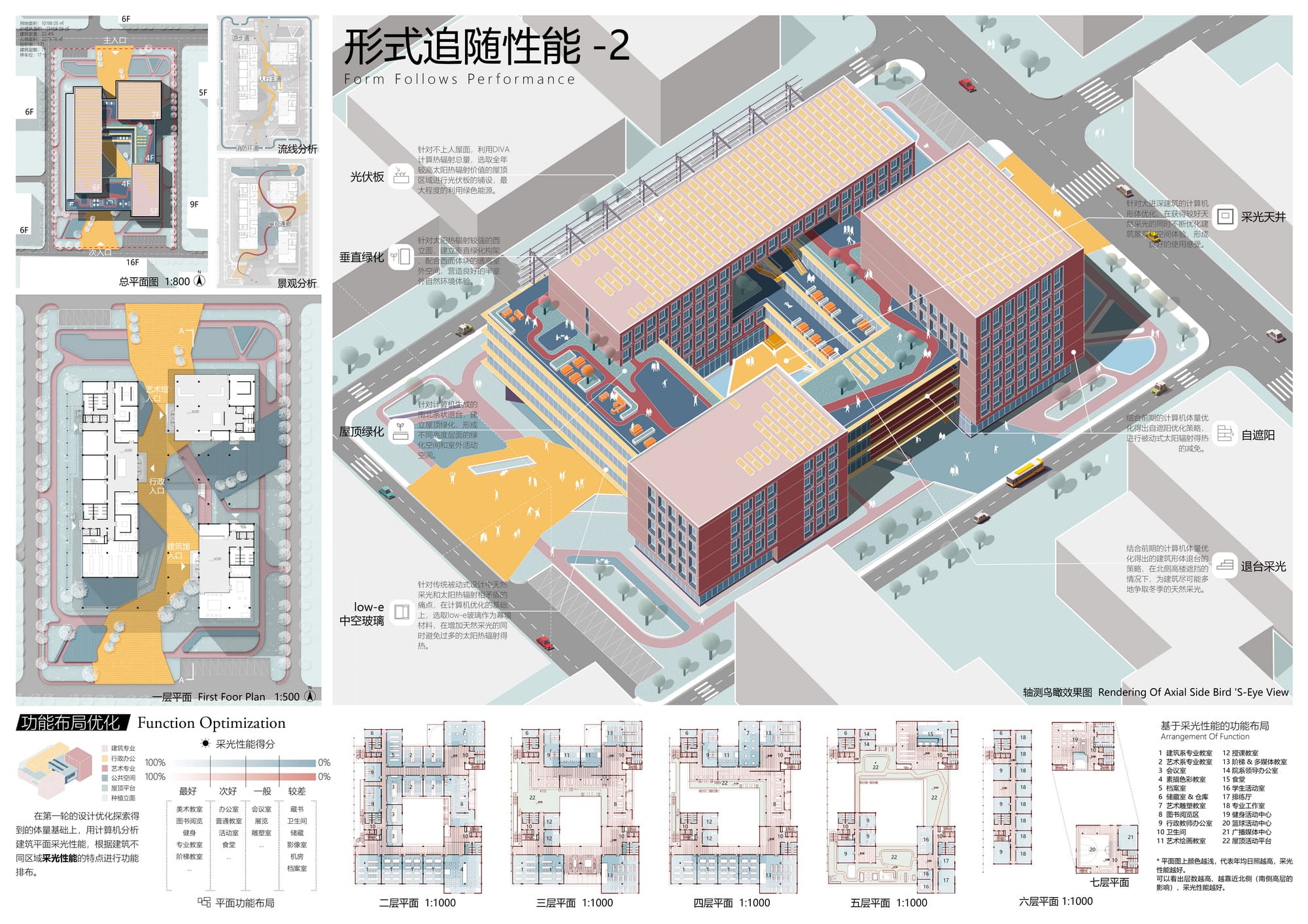
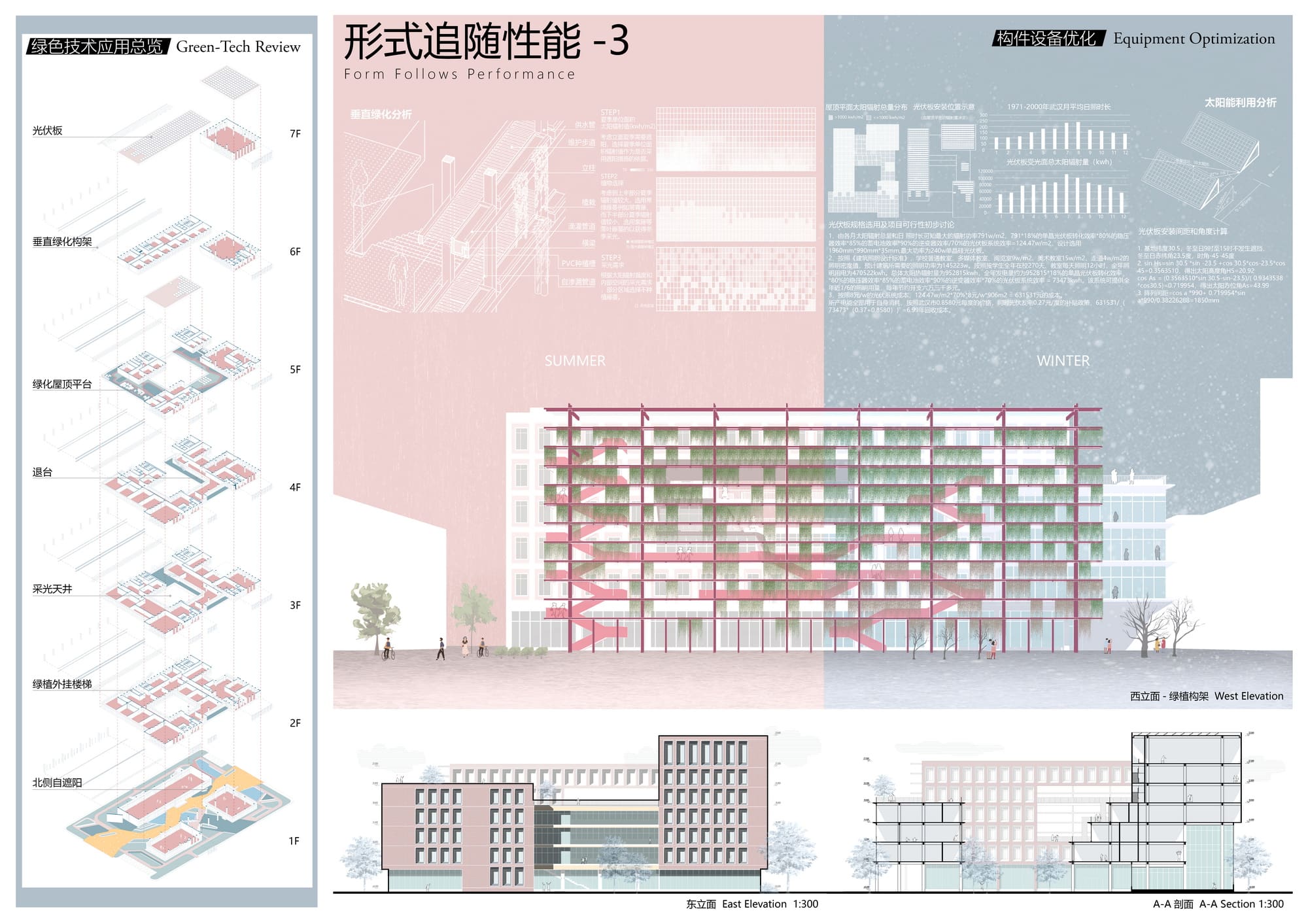
Parallel Optimization for Design Problem Framing and Concept Generation | 平行优化-服务设计问题建构与概念生成
In this design project, the designer gained key performance-related insights through parallel optimization explorations of thermal radiation control and natural daylighting performance, and then integrated these understandings into the framing of design problems and the subsequent generation of design concepts. | 在本设计项目中,设计师通过对热辐射控制与天然采光性能进行平行优化探索,获得了关键的性能相关洞见,并将这些理解融入设计问题的构建及后续设计概念的生成中。
Progressive Modeling for Performative Design Optimization | 面向性能设计优化的渐进式建模 | 2018 - 2019
Subproject of Ph.D. Research | 博士研究子项目
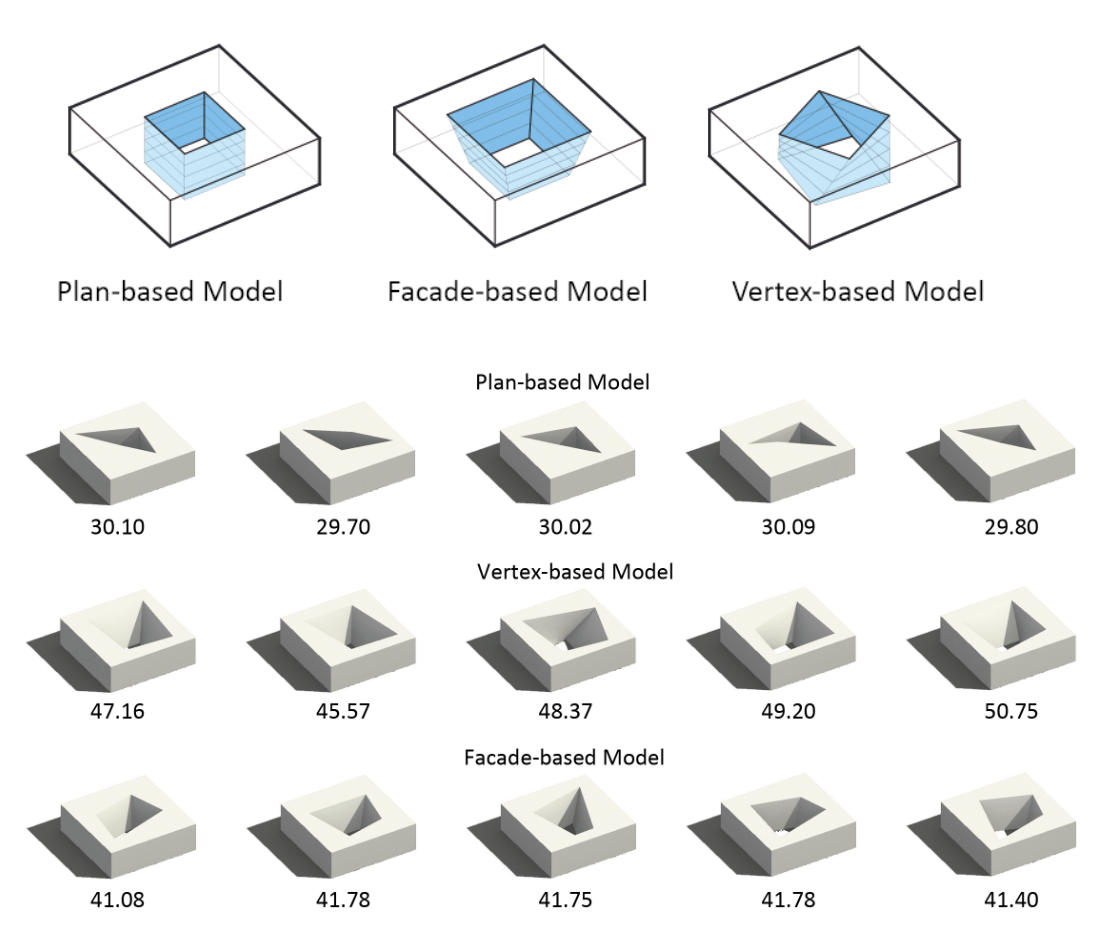
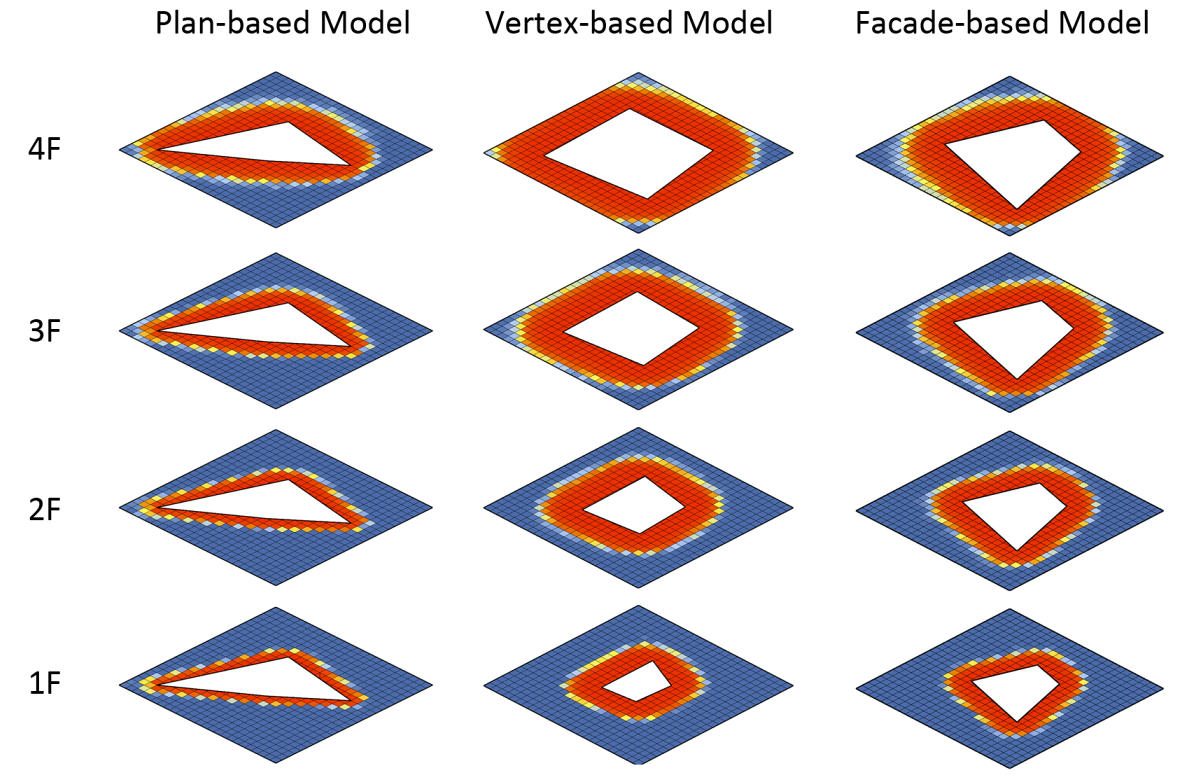
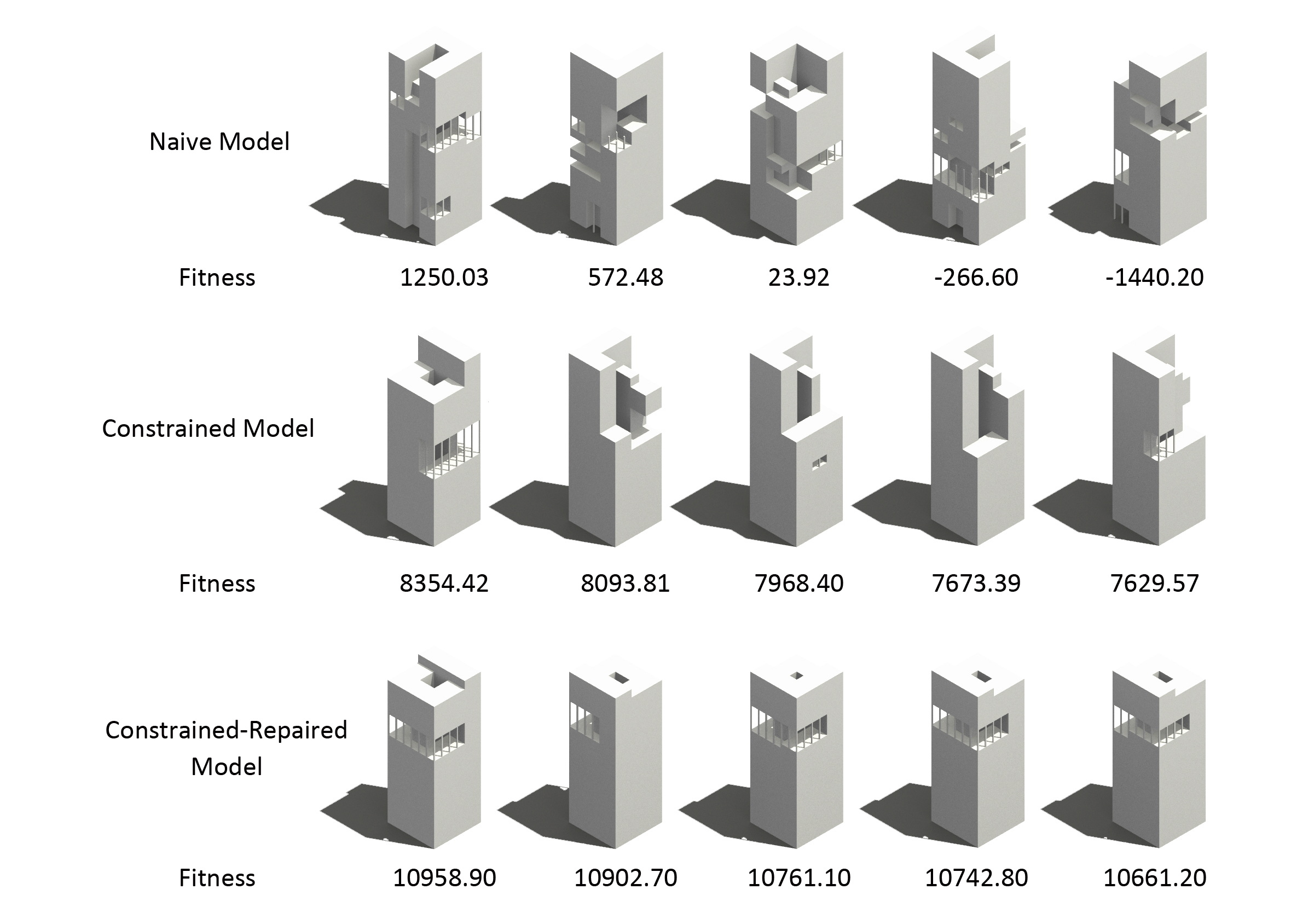
How Computational Design Thinking Can Enhance Reflective and Innovative Design | 计算设计思维如何增强反思性与创新性设计
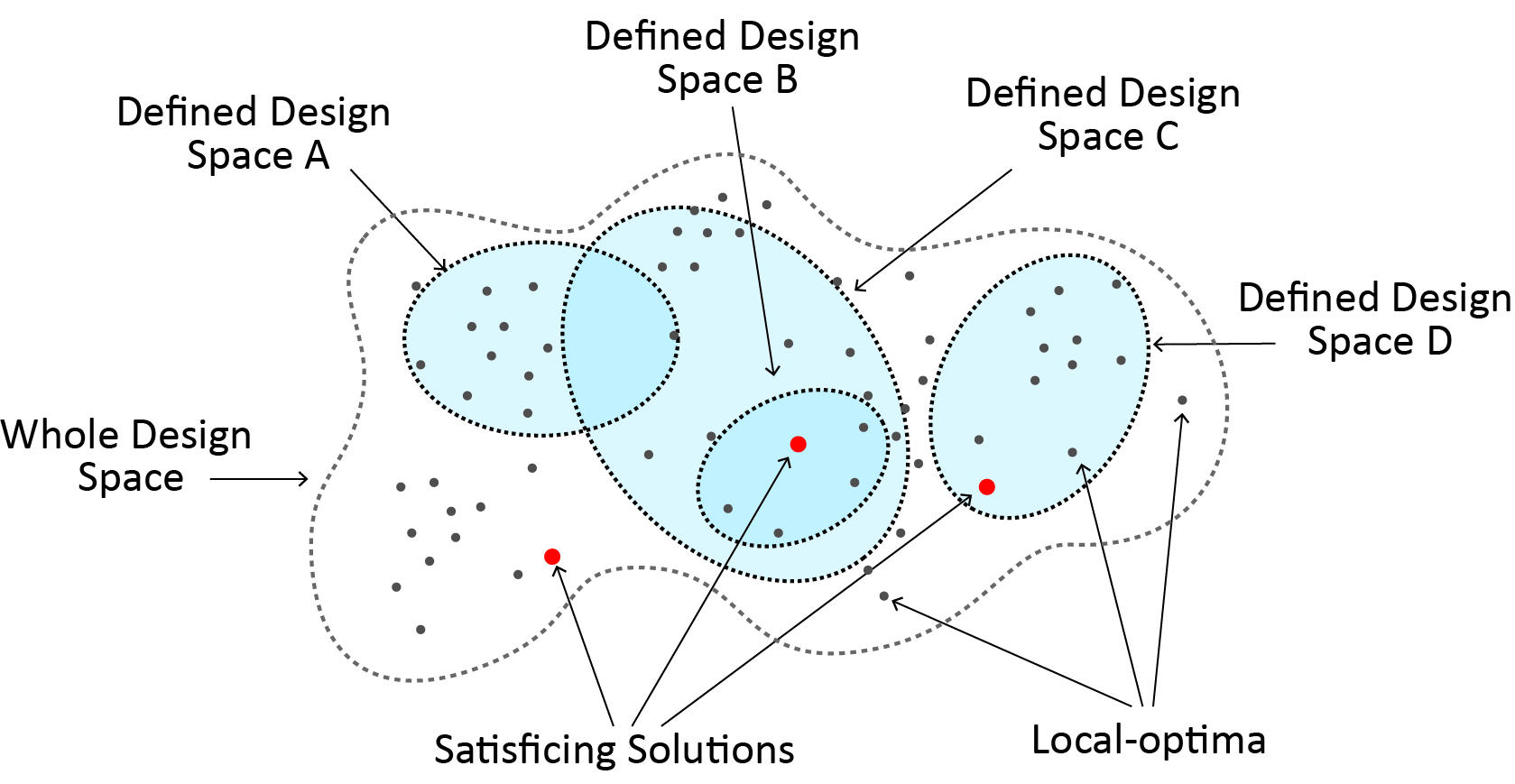
This project showcases a progressive design process driven by computational and performative design thinking. Using an atrium design and a high-rise tower as examples within a performance-based optimization framework, it demonstrates how optimization feedback can enhance designers' reflection and innovation by offering a new perspective on the relationship between building form and performance. For each example, the project presents three parametric models, each progressively introducing more geometric freedom or additional constraints than its predecessor to achieve increasingly significant performance enhancements. | 本项目展示了一个由计算与性能驱动设计思维驱动的渐进式设计过程。以中庭设计和高层塔楼的性能优化为例,项目展示了优化反馈如何通过提供理解建筑形态与性能关系的新视角,增强设计者的反思与创新能力。 针对每个案例,项目呈现了三个参数化模型,每个模型在前一个基础上逐步增加几何自由度或引入更多约束条件,以实现更为显著的性能提升。
Wind-Driven High-Rise Building Optimization | 风驱动的高层建筑优化 | 2014 - 2016
Subproject of Ph.D. Research | 博士研究子项目
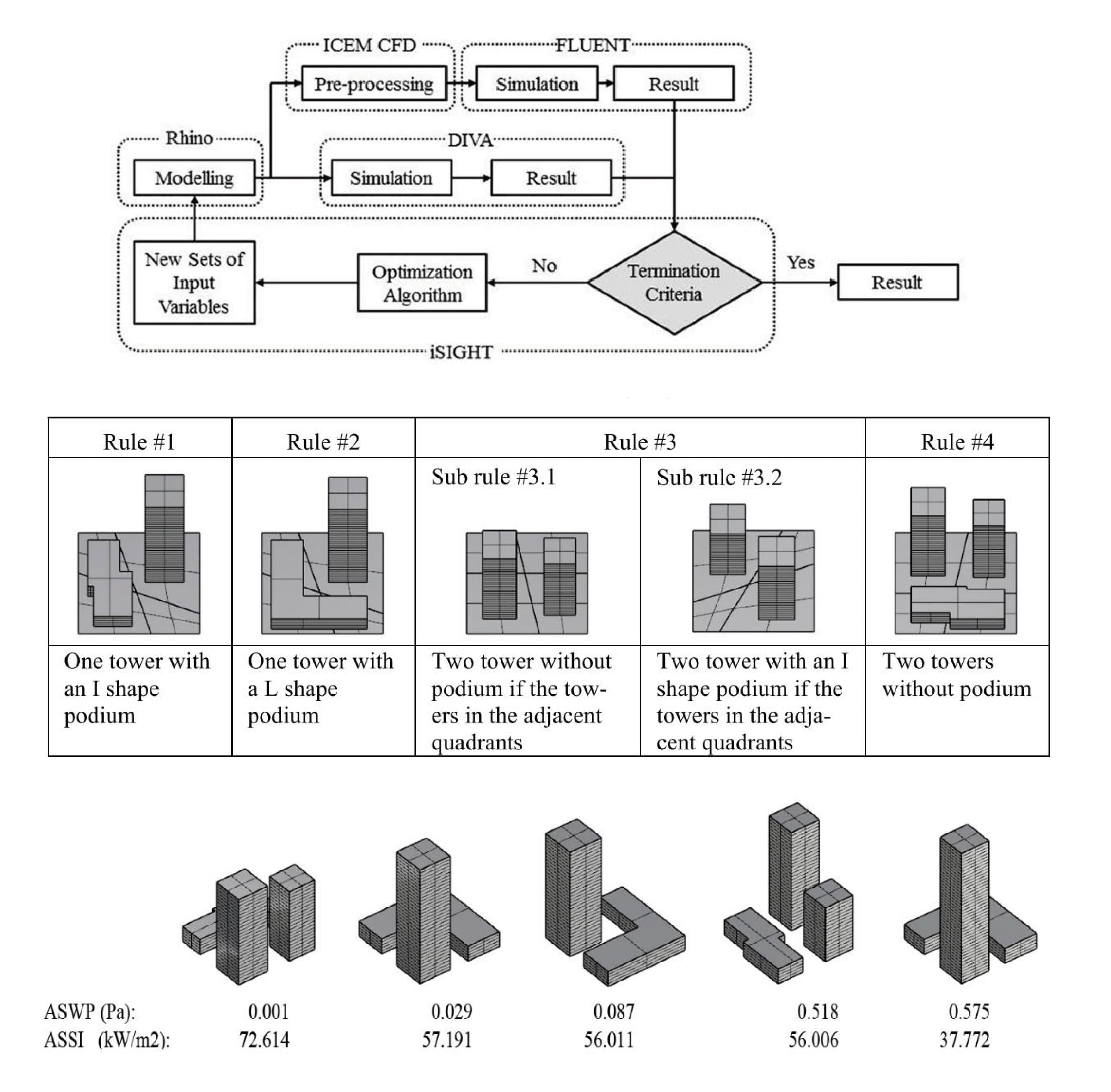
Exploration of High-Rise Tower and Podium Layout Driven by Wind-Related Performance | 风性能驱动的高层塔楼与裙房布局探索
This project establishes an optimization framework that integrates iSIGHT, Fluent, and Rhino to automate design generation, wind-pressure simulation, and design evolution for high-rise buildings. The project also features a parametric generative model designed to create flexible combinations of towers, podium, and front plaza. The results demonstrate how high-rise towers and podiums can be adapted to wind-related and solar-related performance goals. | 本项目建立了一个集成 iSIGHT、Fluent 和 Rhino 的优化框架,用于自动化高层建筑的设计生成、风压模拟与设计演化。该项目还以一个参数化生成模型为特色,该模型旨在实现塔楼、 裙房与前广场的灵活组合。研究结果展示了高层塔楼与裙房如何适应与风能和太阳能相关的性能目标。